
1. Introduction: a turning point for mobility in Belgium
The mobility budget is fundamentally redefining how employees and companies approach professional mobility in Belgium. Although it already exists today, it remains optional in many companies. Yet, it is gradually becoming a true tool for freedom and personalization of commuting and travel.
This evolution is significant: according to RTBF, an increasing number of eligible employees are already choosing the mobility budget, especially in urban areas (RTBF).
2. What is the mobility budget?
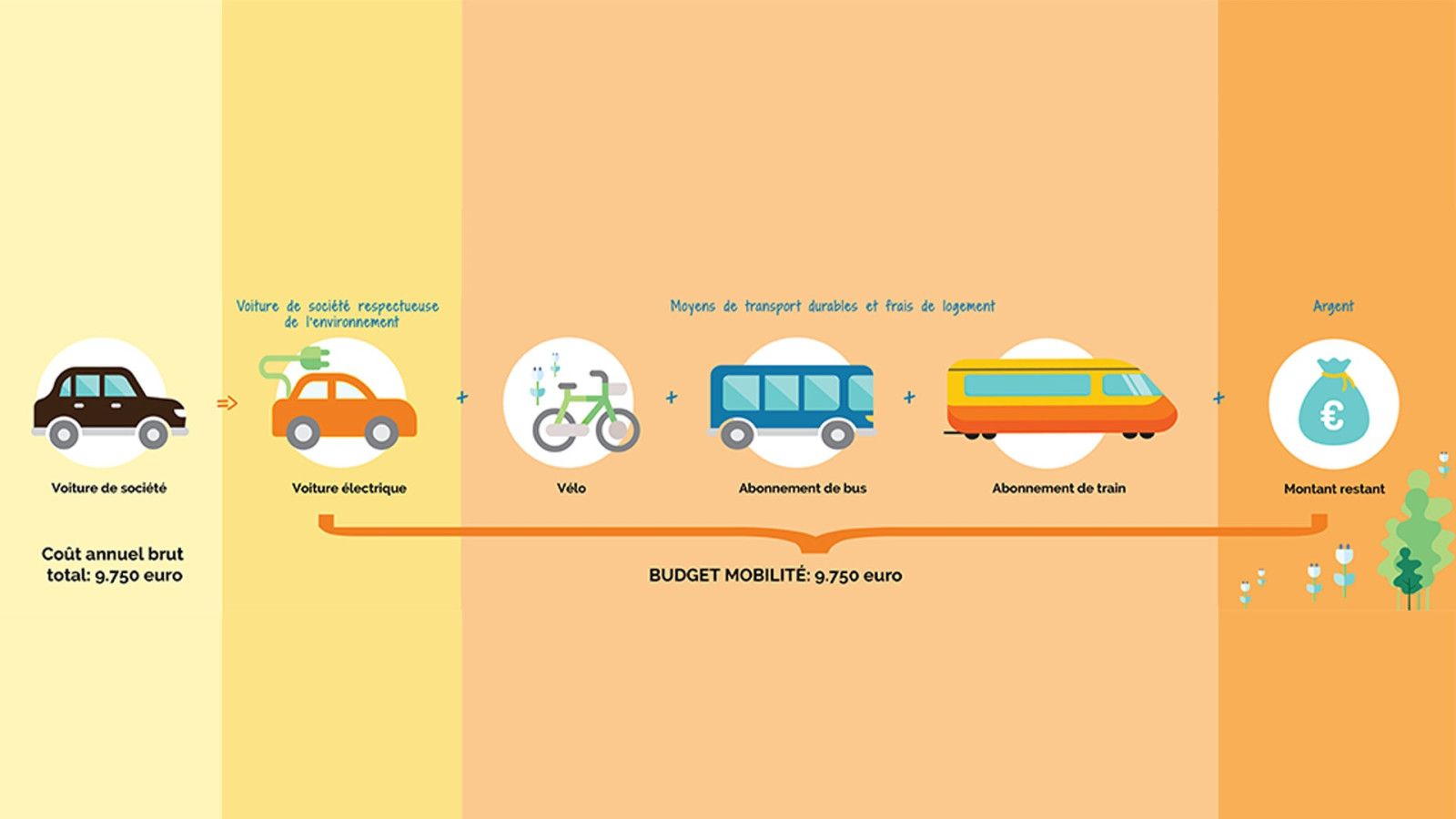
The mobility budget allows an employee to fully or partially give up a traditional company car in exchange for a fixed annual budget, calculated based on the total cost of ownership of the car (TCO – Total Cost of Ownership).
This budget, already available today for employers who wish to offer it, can be freely used within three legally defined pillars:
- A more environmentally friendly company car,
- Sustainable mobility solutions (bike, public transport, carpooling, walking…),
- The unused balance, paid in cash under specific fiscal conditions.
All expenses are tracked through a mobility account, providing a clear view of the available budget and the choices made by the employee.
3. Taxation and amounts of the mobility budget
The success of the mobility budget largely relies on its favorable fiscal treatment. Expenses related to sustainable mobility are exempt from taxes and social contributions, increasing the net purchasing power of the employee.
The budget amount is legally capped: it cannot exceed a certain fraction of the annual gross salary. These limits are regularly highlighted by HR experts (Groups).
The budget operates on a cash flow basis: a staggered purchase (such as a bike paid over several months) is gradually charged to the mobility account, facilitating long-term planning.
4. Legislative changes and regulatory context
The legal framework for the mobility budget is currently undergoing major changes. Initially announced for 2026, the obligation to offer a mobility budget to employees with a company car has been postponed to 2027.
From that date onwards, all employers providing a company car will also need to offer an alternative in the form of a mobility budget, affecting approximately 400,000 employees (L’Echo).
Even though this obligation will only take effect in 2027, the mobility budget is already fully operational today. Anticipating its implementation allows companies and employees to become familiar with the system and immediately benefit from it.
5. Challenges for companies and employees
For companies, the mobility budget requires clear organization, suitable management tools, and transparent communication with teams.
For employees, the main challenge is understanding the system to make informed choices: type of mobility, balance between comfort and taxation, and anticipating future needs.
Implementing the mobility budget today, even when it is not yet mandatory, helps reduce these barriers and prepares a smooth transition for the future.
6. How to make the most of your mobility budget?
The mobility budget allows employees to completely rethink their daily commuting: bike (classic or electric), train-bike combination, shared mobility, or walking.
When used correctly, this budget can reduce commuting stress, improve quality of life, and increase net disposable income.
The key is analyzing your personal situation and understanding the fiscal and practical rules of the system.
7. A solution already available: long-term bike leasing
Although the general implementation of the mobility budget is planned from 2027, concrete solutions already exist today for employees and companies who want to take the lead. We have chosen to offer credible alternatives to the company car today.
We have developed a long-term leasing offer for individuals, designed as a true daily mobility tool. The model is all-inclusive: bike, maintenance, insurance, and assistance are included in a fixed monthly amount.
This solution is fully compatible with the existing mobility budget. The monthly cost of the bike can be financed directly via the mobility account, allowing fiscal optimization while adopting sustainable mobility.
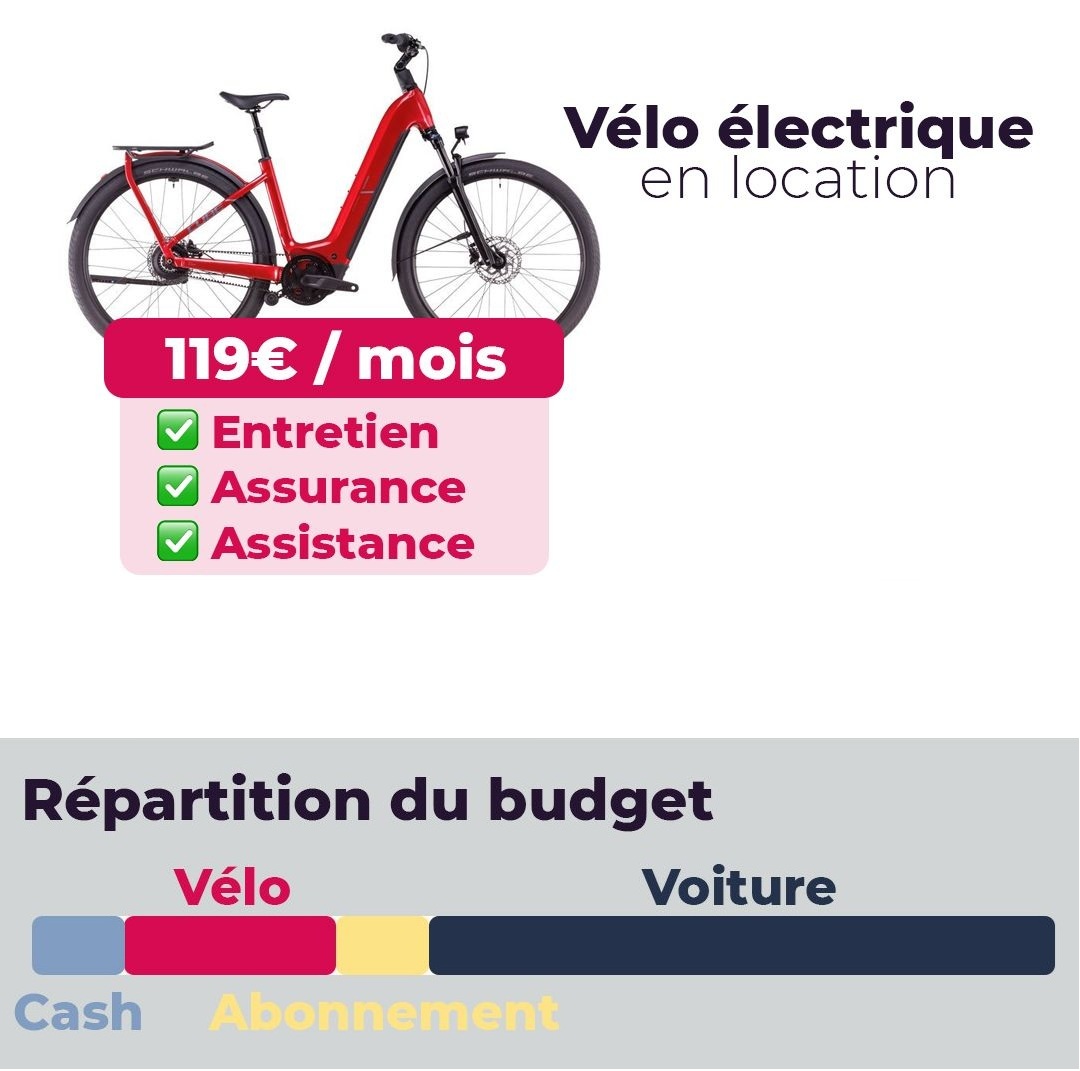
Concrete example: for an electric bike like the Cube Kathmandu Hybrid Comfort Pro 800 , a 24-month lease costs €119 per month, including maintenance, insurance, and assistance.
By comparison, a gross salary increase of €119 per month would, depending on the salary level, result in only €45 to €60 net extra on the payslip. Financed via the mobility budget, the same amount provides a complete means of transport without the heavy tax burden.
8. Mobility budget: already accessible with MBE support
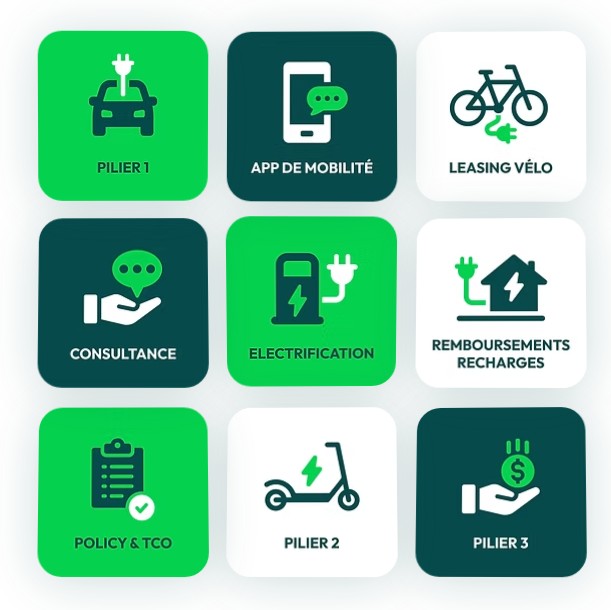
Contrary to popular belief, the mobility budget already exists today. While it will only become mandatory from 2027, companies can already implement it and benefit their employees.
In this context, we are partners with MBE (Mobility Budget Expert), a central platform for managing the mobility budget for companies and their employees.
MBE allows centralizing all mobility budget expenses of employees, regardless of the pillar: vehicle, sustainable mobility, or residual balance. The platform also facilitates eligibility checks and reimbursement management, while ensuring compliance with legal requirements.
As a central tool, MBE provides a clear and structured view of the mobility budget for both employer and employee. Through this partnership, we assist companies who wish to take the lead and integrate sustainable mobility solutions today, such as long-term bike leasing. Do not hesitate to contact us for information or guidance.
9. Conclusion
The mobility budget is gradually becoming a central element of mobility policy in Belgium. Although it is not yet mandatory for everyone, its generalization from 2027 confirms its key role in the transition towards more sustainable transportation.
For employees and companies alike, acting today — with the right partners — allows anticipating regulatory changes and turning a future obligation into a genuine opportunity for flexibility, purchasing power, and well-being.