
Five years ago, electronic shifting was a luxury for professional racers. Today, the cheapest bike in our range that has it is a trekking bike at €2,099 — and it does not even have a battery to charge.
Here is what electronics really change while you are pedalling, what they do not change at all, and from what kind of use they become a genuine gain rather than a gadget.
Battery figures, architectures and features taken from official Shimano and SRAM documentation. Prices incl. VAT recorded in our online catalogue on 9 September 2026, all model years included. Full sources at the end of this article.
€2,099
the cheapest bike with electronic shifting in our range. A trekking bike, not a race bike.
1,000 km
the lower claimed range of a Shimano Di2 12-speed battery. Up to 2,000 km on a 1× setup.
0 cables
to retension, grease or replace. That is what this is all about.
The short answer, if you are in a hurry
Three profiles, three answers. Everything else in this article explains why.
A real gain you ride all year round, in all weathers, on a frame with fully internal cable routing. You will never touch a derailleur adjustment again, and that is a daily relief.
A comfort you have small hands, little finger strength, or arthritis that makes a mechanical lever painful. A button takes negligible effort. That is often the argument that settles it.
Not necessary you ride 2,000 km a year on a simple frame, and your mechanical shifting works well. Put the difference into wheels or tyres: you will feel it more.
What it is not
→ It is not faster in any stopwatch sense. A well-adjusted mechanical groupset shifts just as quickly. What changes is consistency.
→ It is not lighter. Batteries and motors weigh what cables and housing do not. Differences run to a few tens of grams, in either direction.
→ It is not fragile. A SRAM AXS groupset is rated IP69K: it takes a high-pressure washer.
→ It is about consistency over time and effort at the finger. Two things you cannot measure on a ten-minute test ride.
What disappears: the cable
Everything follows from a single change. The steel wire that pulled the derailleur is replaced by an electrical command. And an electrical command does not stretch.
On a mechanical groupset, your finger pulls a steel cable sliding through housing for a metre and a half, around several bends. That cable stretches in the first weeks, then the housing gets dirty, then the whole thing corrodes. The adjustment drifts slowly: that is normal, that is mechanics.
On an electronic groupset, the lever sends a signal — through a thin wire in Shimano Di2's case, with no wire at all in SRAM AXS's. A small motor moves the derailleur to exactly the same place, on day one as after 20,000 km. Nothing lengthens, so nothing drifts.
On modern frames with fully internal routing — that is, almost every recent road and gravel bike — this difference takes on another dimension: replacing a shift cable there often means removing the handlebar and the headset.
The six real advantages
Here is what our customers report after a season, ranked by how much it matters in real life — which is not the order the brochures use.
1. Consistency the shift is identical in January and July, clean and dirty, new and worn. No more of that little noise that appears after three weeks and that you end up living with.
2. Finger effort a button replaces a sprung lever. On a long ride, descending, gloved and with cold hands, the difference is huge. For many riders this is the decisive argument.
3. Shifting under load the motor does not weaken when you push hard. Some systems go further and deliberately delay the shift by a fraction of a second when the force is excessive, to protect the chain.
4. Two rings handled for you with Shimano's synchronised mode you only command one thing: harder, easier. The front derailleur follows on its own at the right moment. Genuine comfort in the mountains.
5. Adjustment by app the manufacturer's app lets you fine-tune derailleur position to a tenth of a millimetre, reassign buttons, change shift speed, and see the remaining charge.
6. Extra controls extra buttons on the tops to shift without leaving that position, dropper post control, head unit control. None of that exists mechanically.
And on a mountain bike, a seventh argument
→ SRAM's most recent MTB drivetrains mount directly to the frame, with no derailleur hanger. The derailleur clamps around both sides of the dropout and ties into the axle.
→ The result: no more bent hanger after a crash, no limit screws or B-screw to set, and a derailleur that rotates backwards on impact instead of breaking.
→ This requires a frame built to the UDH standard. Older frames are not eligible — worth checking before any upgrade plan.
What you are told less often
Four real limitations. None is a deal-breaker, but it is better to know them before buying than on the day of a failure.
Charging a flat battery means a bike stuck in one gear. Count on 1,000 to 2,000 km with Shimano, around twenty hours of riding per derailleur with SRAM. Not a burden, just not something to forget before a long trip.
Repair a broken cable can be replaced anywhere for €5. A failed electronic derailleur is replaced as a whole unit, at an authorised dealer. That is the genuine weak point on far-flung travel.
Price at equivalent tier, electronics cost roughly €400 to €600 more on a complete bike. On our bikes, that is about one trim level.
Upgrading converting a mechanical bike to electronic almost always costs more than the difference between two new models. You have to replace levers, derailleurs, battery and sometimes the seatpost.
Two schools: Shimano Di2 and SRAM AXS
Both work very well. They simply do not solve the problem the same way, and that has concrete consequences in the workshop.
Shimano Di2 semi-wireless: the levers talk to the derailleur wirelessly, but the derailleurs stay wired to a central battery, often hidden in the seat tube. One battery to charge, 1,000 to 2,000 km of range, and synchronised mode on double-ring setups.
SRAM AXS fully wireless: each derailleur carries its own removable battery, each lever a coin cell rated for two years. No wiring inside the frame — a huge advantage on fully integrated bikes. Around twenty hours per battery, one hour to charge, 60 % in twenty minutes.
Shimano Q'AUTO the third way, and the most surprising: a dynamo hub generates electricity as you ride, three sensors read speed, cadence and gradient, and the drivetrain shifts on its own. No battery to charge. It is what powers the cheapest trekking bike on this page.
How to choose between them
→ Your frame has fully internal routing and you want to be able to work on it yourself: AXS, without hesitation. Nothing has to pass through the frame.
→ You ride a double ring in the mountains: Di2, for the synchronised mode that handles the front for you.
→ You travel far, for a long time: Di2, for its single battery and its long range. Take the charging cable, not four batteries.
→ You want nothing to charge at all: Q'AUTO, on a trekking or urban bike.
Our bikes with electronic shifting
From €2,099 to €3,499, six very different ways in: trekking, gravel, road, cyclocross and mountain bike.
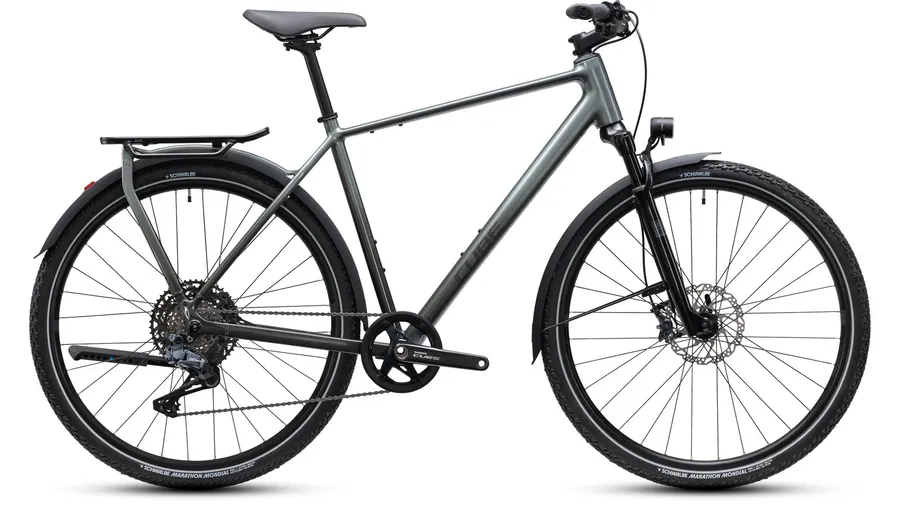
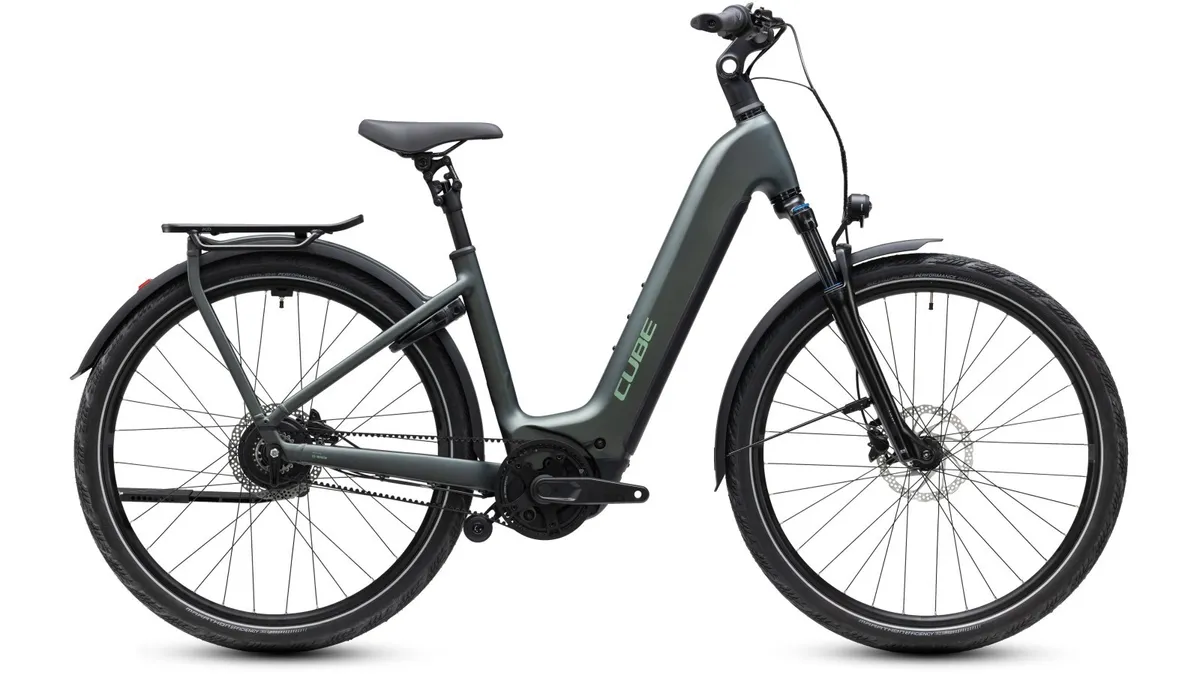
Trekking bike with Shimano CUES Di2 Q'AUTO 11-speed: the drivetrain shifts by itself and charges as you ride. The most affordable, and the most surprising.
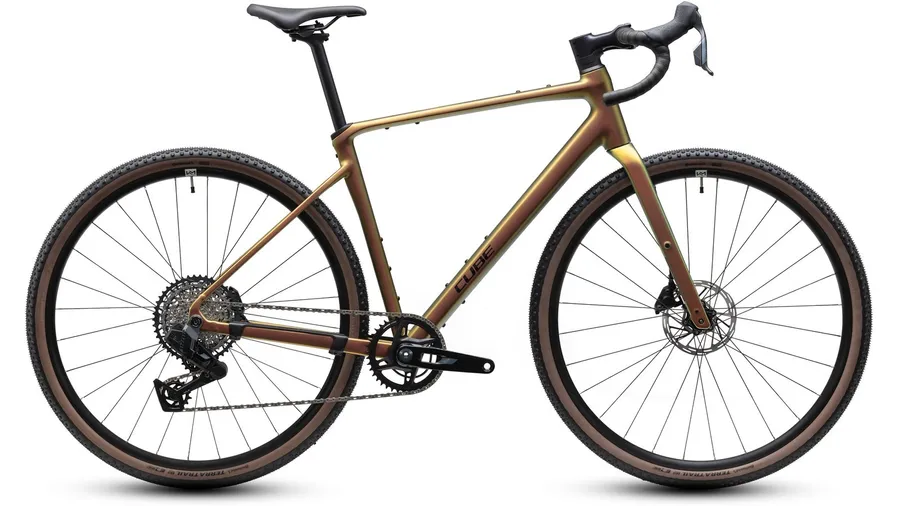
Aluminium gravel bike with SRAM Rival XPLR AXS, fully wireless. The cheapest way into electronic shifting on an off-road-capable bike.
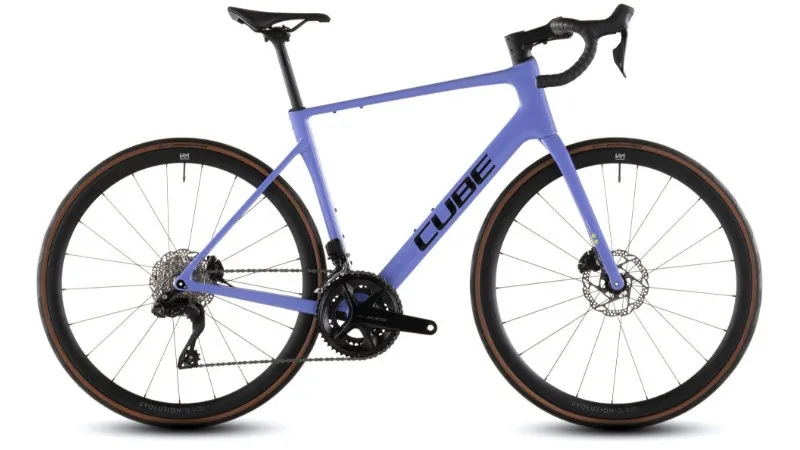
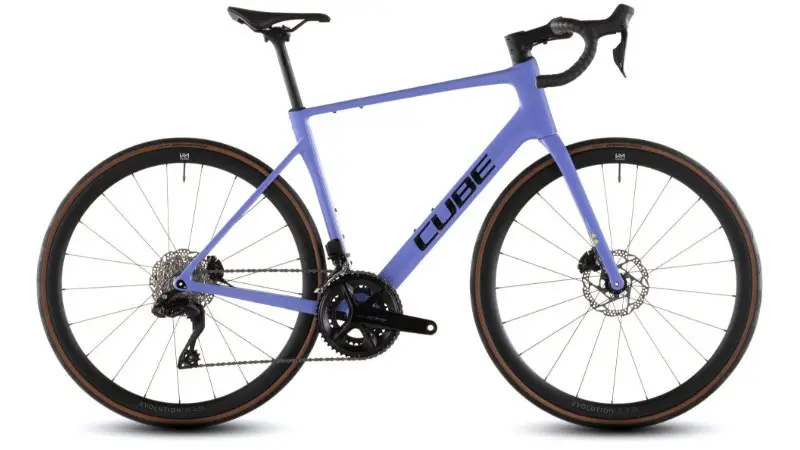
Carbon endurance road bike with Shimano 105 Di2 2×12. The most common build we sell: two chainrings, synchronised mode available.
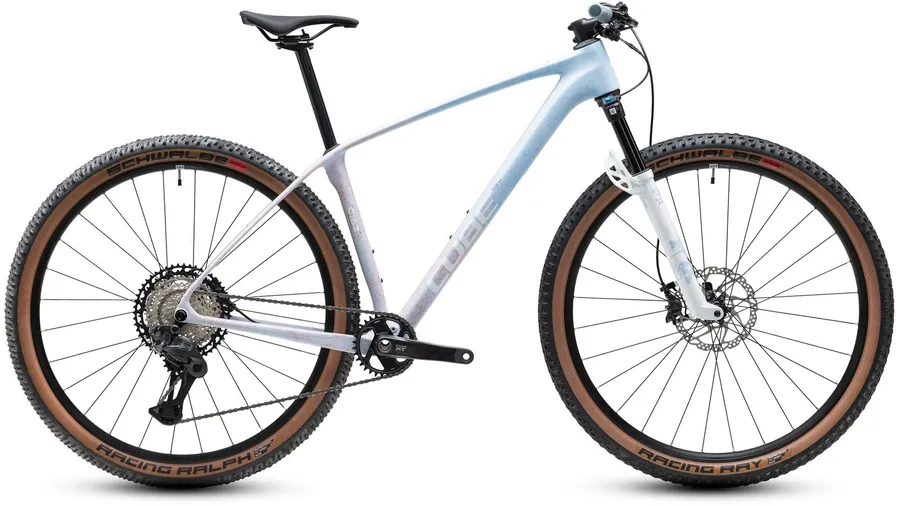
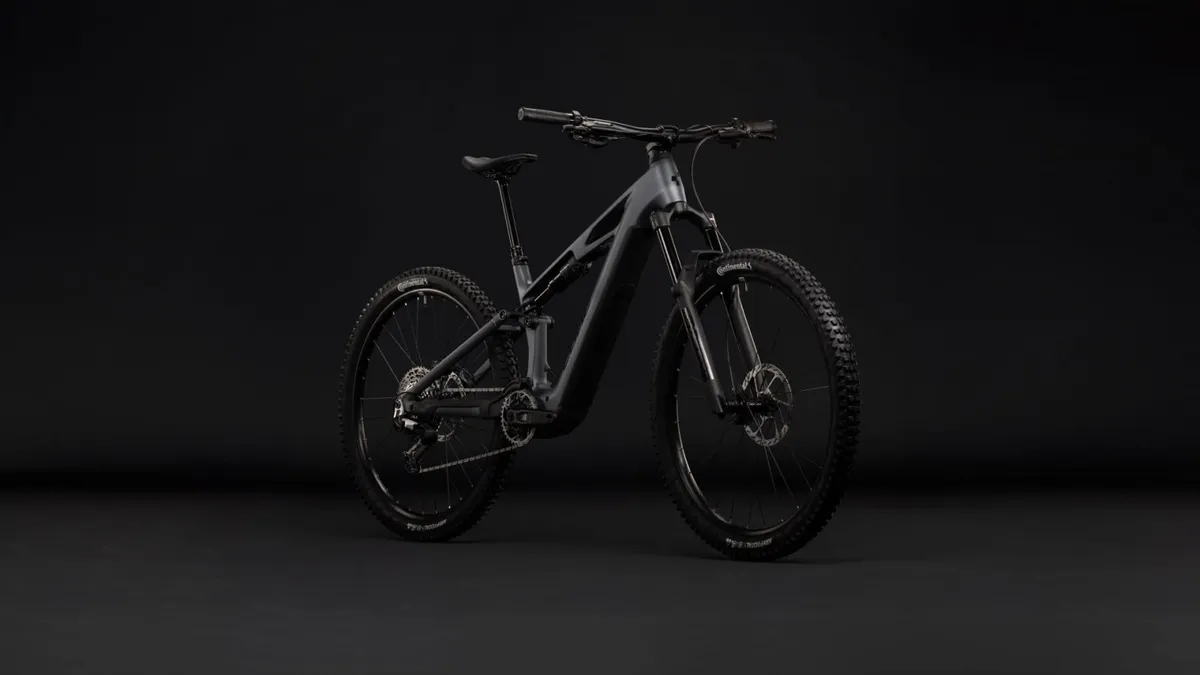
Carbon cross-country mountain bike with Shimano XT Di2 1×12. It is on a mountain bike that consistent adjustment shows most, mud included.
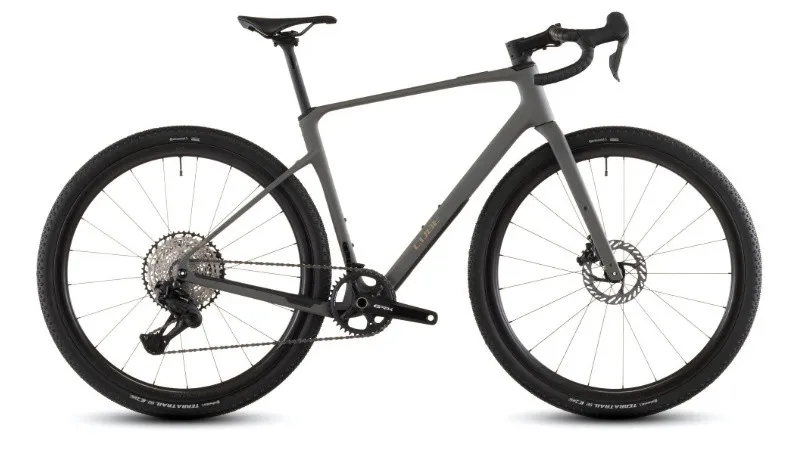
Carbon gravel bike with Shimano GRX Di2 12-speed. The groupset designed for the trail: more enveloping levers, clutch rear derailleur.
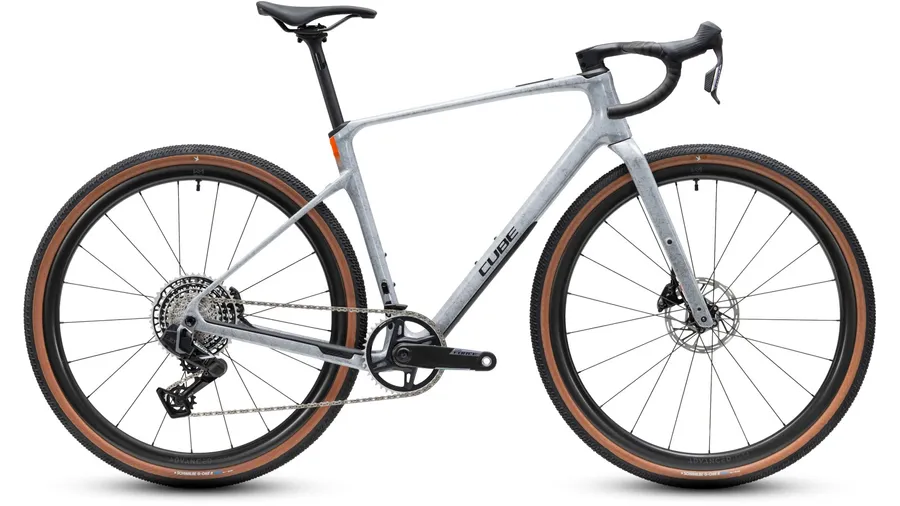
Carbon gravel bike with SRAM Force XPLR AXS, wireless, with thirteen sprockets at the back. One ring up front, and jumps as tight as a double.
The questions we get asked in the shop
What happens if the battery goes flat mid-ride?
You stay in the gear you are in and ride home in it. Not pleasant, but not dangerous: the brakes are independent of the drivetrain. The systems warn you well in advance, with an LED or an alert on your head unit, and on a double-ring Shimano setup the front derailleur is cut first to preserve the rear gears. In practice this happens to people who never look at the indicator.
Does it mind rain and washing?
No. The components are sealed, and SRAM claims IP69K certification for its AXS system — meaning resistance to hot water at high pressure. In practice an electronic groupset copes with a Belgian winter better than a mechanical cable, which corrodes unseen inside its housing.
Can a mechanical bike be converted to electronic?
Technically yes, economically rarely. You have to replace the levers, both derailleurs and add a battery: you quickly reach the price of a complete, better-equipped bike. On a mountain bike you also need a UDH frame for the latest SRAM drivetrains. Bring the bike in and we will cost both options side by side, honestly.
Does the drivetrain still need servicing?
Yes, exactly as before. Electronics remove cable adjustment, not the wear of the chain, cassette and chainrings. An electronic groupset on a worn chain skips just as much as a mechanical one. Cleaning, lubrication and elongation checks remain on the programme.
Can it be hacked, or interfere with another bike?
No. Pairing happens once between your own components, over an encrypted link with very short range. Two electronic bikes side by side in a bunch do not talk to each other. The question comes up often; the answer is always the same.
Our sources
Semi-wireless architecture, BT-DN300 battery, 1,000 to 2,000 km of range depending on front derailleur use, synchronised mode and E-TUBE customisation: Shimano documentation (bike.shimano.com) and the BetterShifting technical guide.
Dynamo hub, speed, cadence and gradient sensors, automatic shifting and battery-free operation of the Q'AUTO system: official Shimano announcements relayed by road.cc and Cyclist.
Twenty hours of range per derailleur, two-year coin cell in the levers, full charge in one hour and 60 % in twenty minutes, IP69K certification, deliberate shift delay under excessive load: SRAM (sram.com) and ENDURO Mountainbike Magazine, « SRAM AXS — 13 good reasons ».
Direct mounting to a UDH frame with no derailleur hanger, removal of limit screws and B-screw: SRAM, « Understanding UDH and Full Mount » (sram.com).
Prices incl. VAT and fitted drivetrains: KAMEO Bikes online catalogue, recorded on 9 September 2026.
The simplest way is to press the button
Our electronic bikes are available to test ride in Liège and in Brussels. Ten minutes is usually enough to decide.