
This is the most technical question we get at the counter, and the one that gets the most contradictory answers online. Oil or wax? Both camps have their believers, and both are right — just not for the same rider.
Good news: this is one of the rare cycling topics where measurements exist. Independent labs run chains for 5,000 km with dust and water, then weigh what is left. We start from those figures.
Efficiency and wear measurements: tests published by Zero Friction Cycling and relayed by CYCLINGABOUT. Prices incl. VAT taken from our online catalogue on 9 September 2026. Full sources at the end of this article.
7.8 W
the loss of the fastest wax on the test rig, at 370 W input. The gaps between products are tenths of a watt.
3 to 4 ×
less chain wear with wax, in dirty conditions, over 5,000 km of rig testing.
300 km
the reapplication interval for wax on the road. A thick oil lasts 200 to 300 km. The gap is small.
The short answer, if you are in a hurry
Three profiles, three answers. Everything else in this article only explains why.
Thick oil you ride every day, in all weathers, and you want to think about it as little as possible. It resists rain and forgives neglect. The right choice for a commuting bike.
Thin oil you mostly ride in dry weather, you dislike black legs, but you do not want to remove your chain. The most common compromise, and by far the best seller.
Wax you cover distance, your drivetrain is expensive, and a maintenance ritual does not put you off. It is the only choice that really makes parts last.
What it is not
→ It is not a speed question. The efficiency gap between the best products in either camp is one to three watts. At 200 W, that is 1 %.
→ It is not a question of bottle price. A bottle of wax and a bottle of oil cost the same. It is the cassette that makes the budget difference.
→ It is not a question of level. A tourer riding 8,000 km a year has more to gain from wax than a Sunday racer.
→ It is a question of how much time you accept spending on it, and of the weather you ride in.
What really happens inside a chain
A chain has 116 links and as many joints rubbing together. What wears them out is not friction: it is the grit that gets in.
An oil stays liquid on the chain. It penetrates the pins well, it resists water, it stays put for a long time. But it also stays sticky on the surface: road dust bonds to it, mixes with it, and the resulting paste works its way into the joints. Labs call it an abrasive paste — that is exactly what it is.
A wax dries into a solid layer. Nothing sticks to it: dust bounces off or piles up without penetrating. When the wax eventually flakes off, it takes the dirt with it. That is the single, sufficient reason why a waxed chain lasts longer.
And it is also its weakness: wax does not resist water the way oil does. In Belgian rain it washes off faster, and a waxed chain without wax is a dry chain. One that squeaks, and wears out very fast.
What the measurements say
Two things get measured: the watts lost in the drivetrain, and chain wear after thousands of kilometres with controlled contamination. The results do not tell the same story.
7.8 W the best drip wax on the rig at 370 W input, on a Shimano XT chain at 92 revolutions per minute for one hour.
+ 0.2 to 1.1 W the gap between the five best drip waxes. Next to nothing: nobody feels half a watt.
1.76 chains the wear from a benchmark thin oil over 5,000 km with dust. In other words: the chain is dead, and the next one is well on its way.
0.00 chains the measured wear of the best hot wax over those same 5,000 km. No wear detectable with a gauge.
14 % / 56 % the average wear of a waxed chain versus an oiled chain, in the extreme contamination test block. A ratio of one to four.
In other words: on efficiency, the debate is closed and the stakes are nil. On wear, the gap is enormous, and it does not show on the lubricant receipt — it shows on the drivetrain one.
The real cost: it is not the bottle
A worn chain eats its cassette, then its chainrings. That is where the difference lies, and it runs into hundreds of euros.
A rider on oil typically replaces the chain every 8,000 to 10,000 km. Wax users rotating two chains report 20,000 to 25,000 km per chain. Over 30,000 km, that can be the difference between six chains plus three cassettes, and a drivetrain that has cost nothing but time.
These figures come from very meticulous users, on road bikes, with a strict protocol. Halve them for real, distracted use: the saving still lands firmly on the wax side.
The calculation that matters to you
→ Under 3,000 km a year: your choice of lubricant will not change your budget. Take the simplest one.
→ Over 6,000 km a year, or a high-end 12-speed drivetrain: wax pays for itself with the first cassette saved.
→ Electric bike: motor torque wears the chain far faster. This is the case where regular maintenance pays off most, whatever the product.
Oil: simple, forgiving, always available
This is what 90 % of cyclists use, and for good reasons. Open the bottle, put a drop on each link while turning the pedals backwards, wipe off the excess with a rag, ride. No dismantling, no drying time.
Two families not to be confused. Wet oil, thick, made for rain and winter: it holds on, but it turns everything black. Dry oil, thin, made for dry weather: it keeps the drivetrain clean, but it disappears with the first serious downpour. In Belgium, many riders keep a bottle of each and switch in November.
The winter oil, thick and tenacious. The default choice for a bike that goes out in all weathers and sleeps outside.
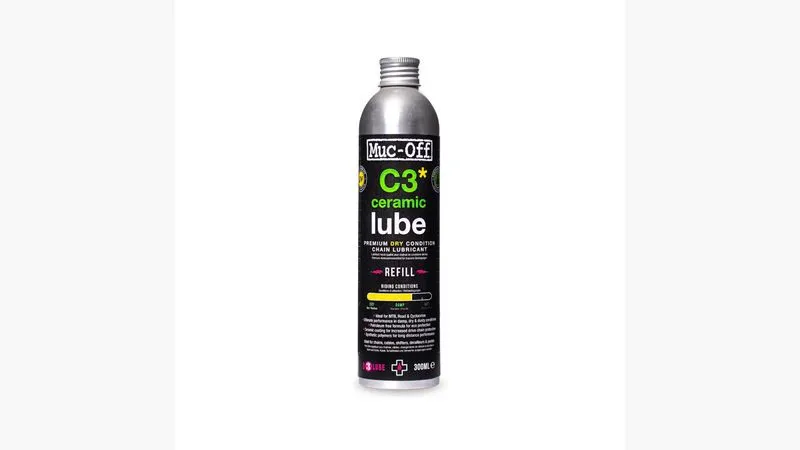
The summer oil, thin, which leaves the drivetrain clean. Reapply after every ride in the rain.
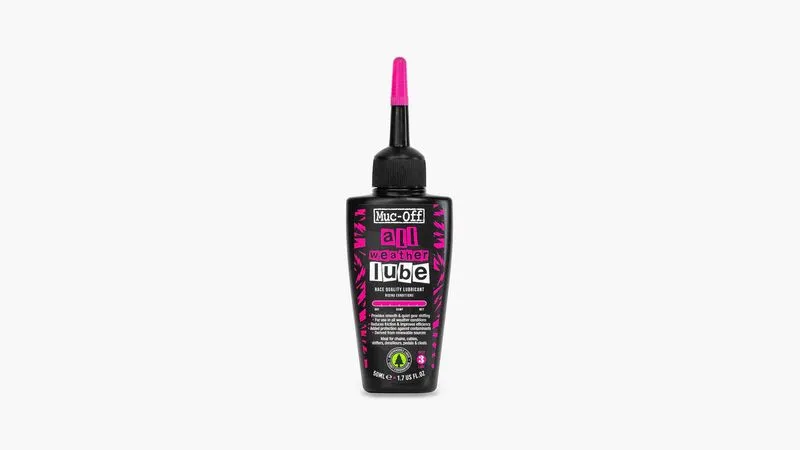
The compromise, so you do not need two bottles. A little less clean than the dry, a little less tenacious than the wet.
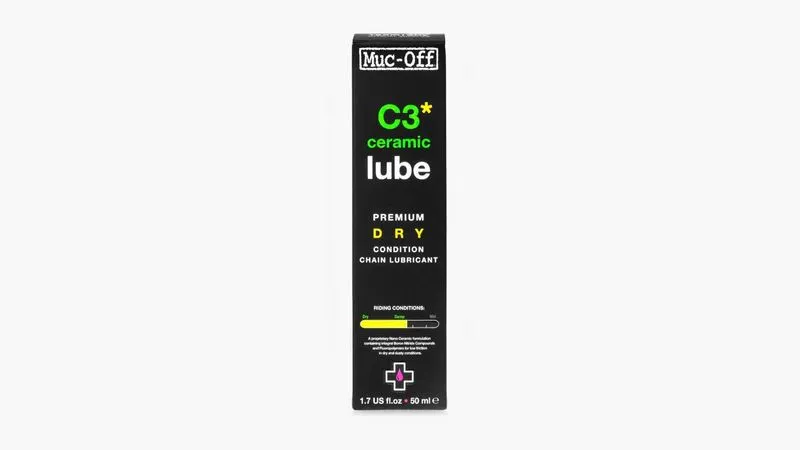
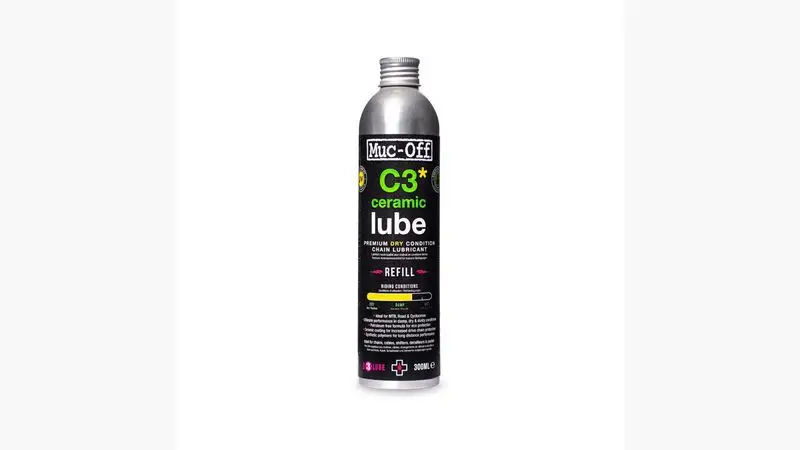
The version loaded with ceramic particles, for dry weather. A step up in durability and cleanliness over long distances.
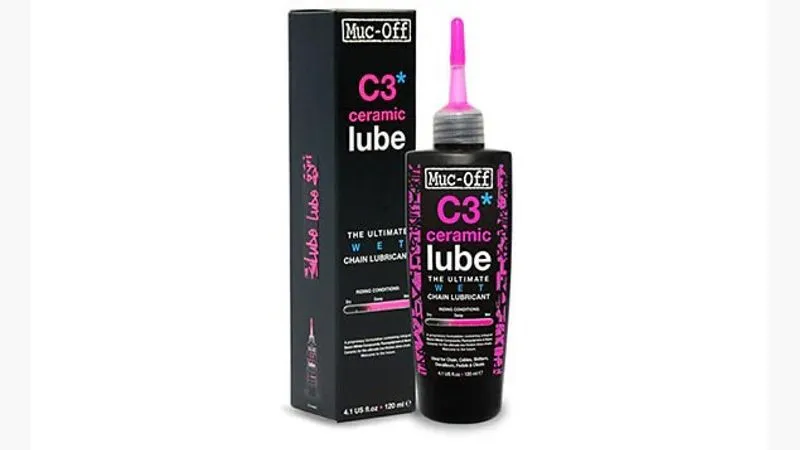
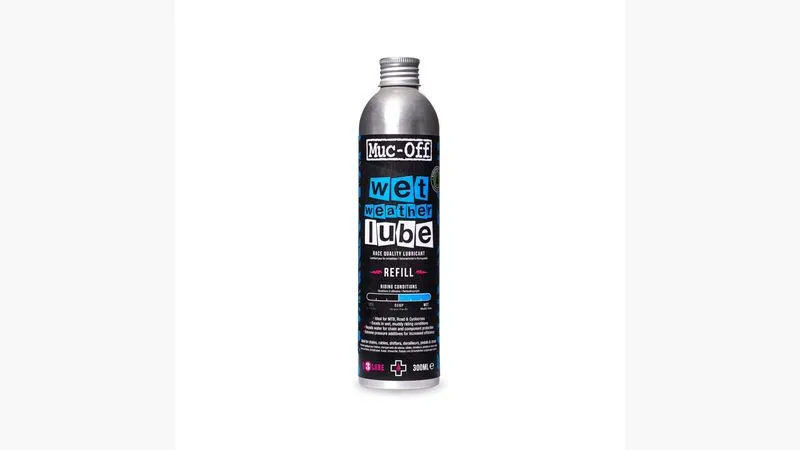
The ceramic equivalent for wet conditions. For a bike that rides through winter and should not need re-oiling every week.
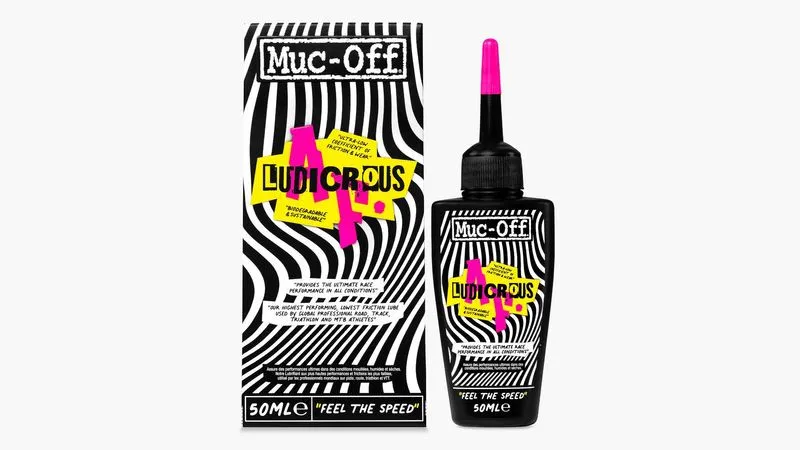
The race-day bottle, designed for a perfectly clean chain on the day itself. This is not an everyday maintenance product.
Wax: more demanding, clearly more durable
It asks for a ritual. In exchange it offers the one thing no oil can give: a chain that barely wears out.
There are two ways to wax, and they are not equally demanding.
Drip wax it goes on like an oil, drop by drop, but it dries. Allow two to four hours before riding. This is the way in: no dismantling, 80 % of the benefit.
Hot wax the chain is removed and dipped into a bath of molten wax. This is the process behind the lab's 0.00 worn chains. It is also half an hour of workshop time each time.
Two chains the trick used by serious riders: two identical chains with a quick link, one on the bike, one in the bath. Swapping takes two minutes, with no waiting.
300 km the recommended interval on the road (150 to 200 km for maximum longevity). Off-road, count on around eight hours of riding.
Wax at KAMEO Bikes
→ Our drip waxes (Squirt, Muc-Off Dark Energy, KMC Chain Wax) are available in store in Liège and Brussels; they are not yet listed in the online shop.
→ We can also prepare your chain in the workshop: full degreasing, first wax coat, quick link fitted. This is the step that most often goes wrong at home.
Switching to wax: the step everyone gets wrong
If you remember one sentence from this article, make it this one: wax only bonds to bare metal. Applied to a chain that is still greasy, it will not hold, it flakes off within three days, and you conclude — wrongly — that wax does not work.
That applies to a brand-new chain too. Factory grease is not a riding lubricant: it is anti-corrosion protection for transport. It has to go before the first wax coat.
Degreasing is done with solvent, in several successive baths, until the liquid runs clear. Count on at least three baths for a chain that has already been used. Here is what we use in the workshop.
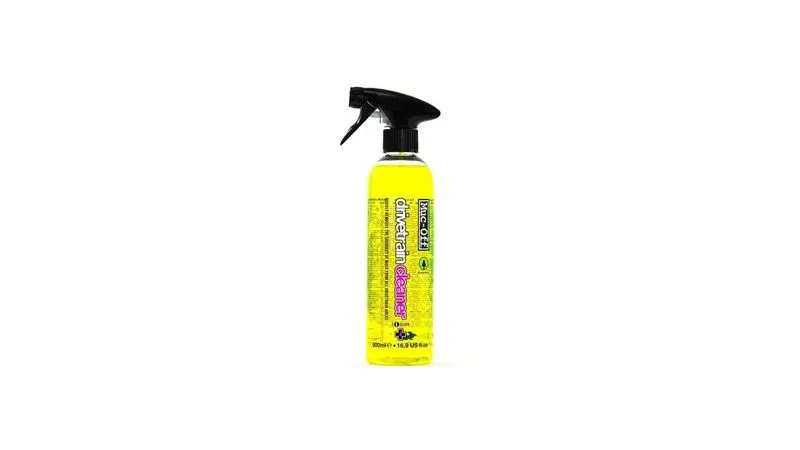
The complete drivetrain cleaner: chain, cassette, chainrings, jockey wheels. Start here, before any change of product.
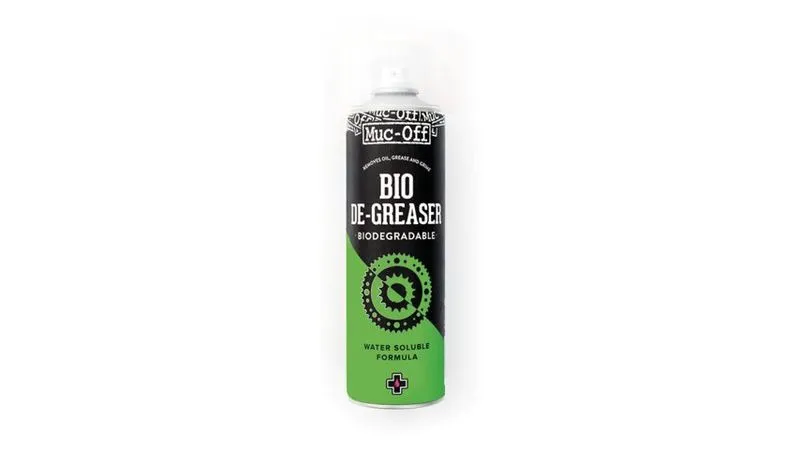
The biodegradable degreaser, the one that removes factory grease from a new chain. Rinse and dry completely.
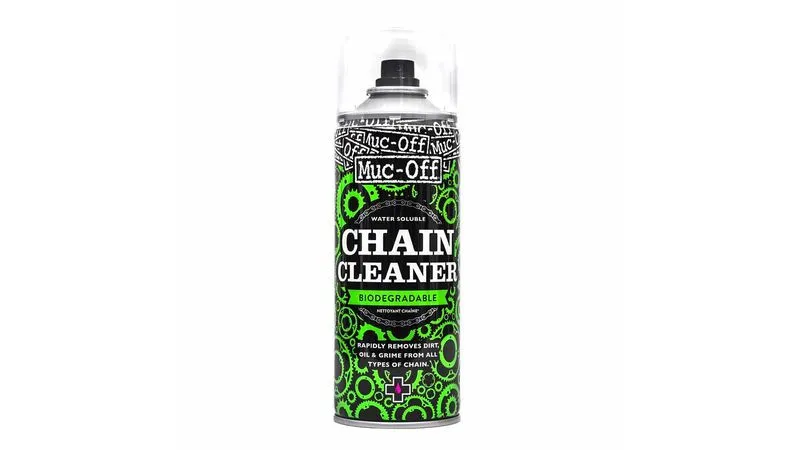
Everyday maintenance, with no dismantling: spray, brush, wipe. The weekly routine for a bike running on oil.
The questions we get asked in the shop
Can I put wax over my current oil?
No, and this is the only absolute prohibition in this article. Wax only bonds to bare metal. On a chain that is still greasy it forms a layer that flakes off within a few rides, and the result is worse than before. It needs a full degrease, several baths, until the solvent runs clear. The other way round carries no risk: you can go back to oil on a waxed chain with no special precautions.
My chain squeaks after the rain, is that serious?
It is the signal that there is no lubricant left in the pins, and that is the moment when wear accelerates most. A dry chain wears out within a few dozen kilometres. Dry it, wipe it, re-lubricate the same evening. With a thin oil or a wax, a single ride in a downpour is enough to wash everything away.
Should a new chain be degreased?
If you are going with wax: yes, without exception. If you are staying with oil: it is not essential, factory grease works acceptably as a lubricant for a few hundred kilometres. It does attract a lot of dust, though, so degreasing from the start remains a good idea.
Does WD-40 or motorbike chain grease work?
No, in both cases. A multi-purpose penetrating spray cleans and drives out moisture, but it does not lubricate durably: you have to lubricate afterwards. Motorbike grease, meanwhile, is far too thick for a 12-speed pitch: it traps dust and turns the drivetrain into grinding paste.
And on an electric bike?
The principle does not change, the frequency does. A mid-drive motor's torque works the chain far harder than a pair of legs, and wear reflects that. If you ride a lot with assistance, check your chain elongation every 1,500 km — it is a two-minute check, and it saves you replacing the cassette at the same time.
Our sources
Wear measurements over 5,000 km with controlled contamination, comparative chain life, reapplication intervals, abrasive-paste mechanism: Zero Friction Cycling (zerofrictioncycling.com.au), an independent Australian laboratory.
Efficiency rankings on the test rig (watts lost at 370 and 680 W, Shimano XT chain, 92 rpm) and summary of the wear data: CYCLINGABOUT, « The 10 Fastest Wax Chain Lubes According To Science » and « The 10 Best Bike Chain Lubes According To Science » (cyclingabout.com).
Preparing a chain before waxing and solvent baths: Rene Herse Cycles (renehersecycles.com).
Prices incl. VAT: KAMEO Bikes online catalogue, recorded on 9 September 2026.
Not keen on degreasing it yourself?
Our Liège and Brussels workshops prepare your chain: full degreasing, first wax coat, quick link. You leave ready to ride.