
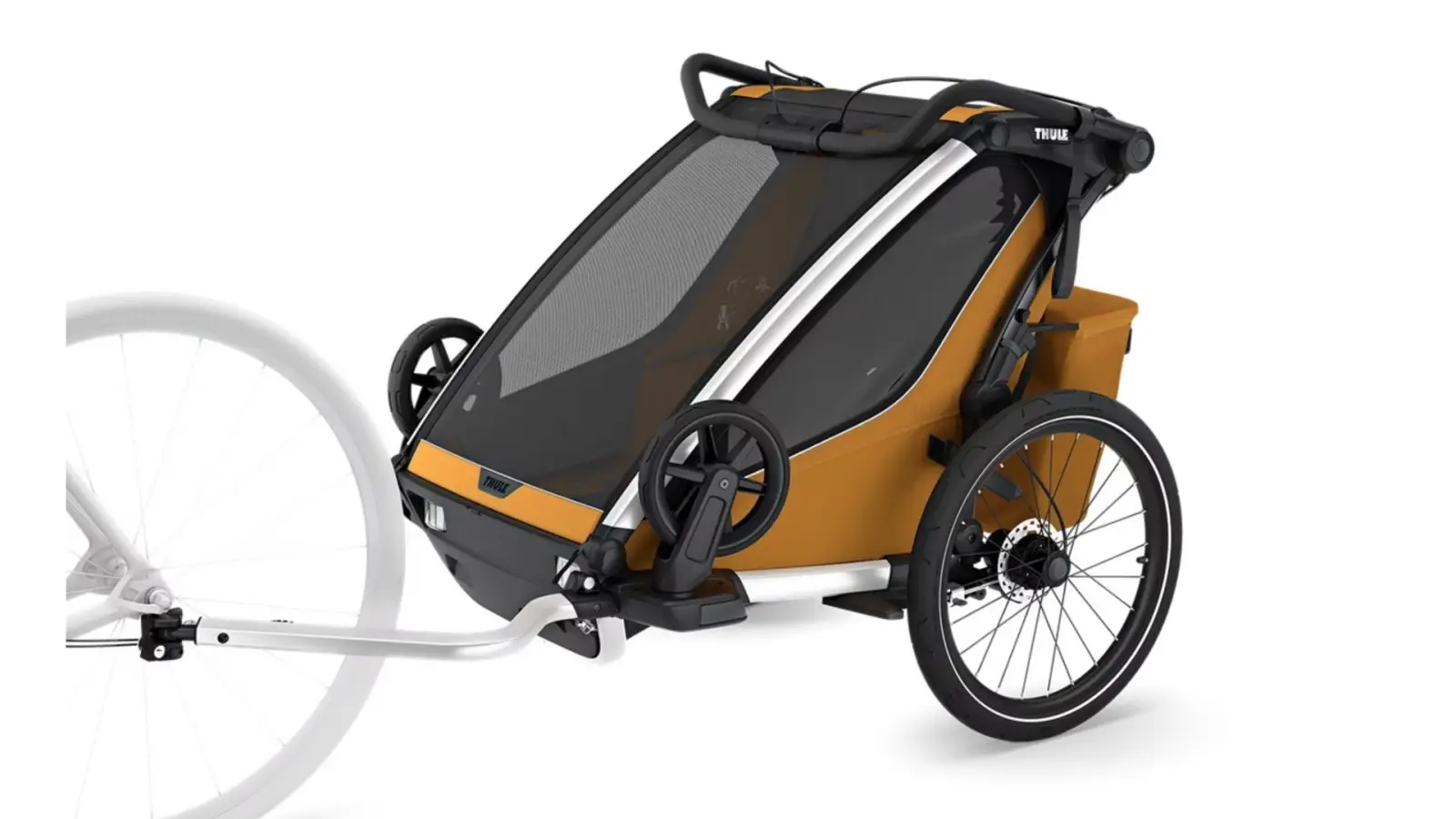
Thule is not one range but five. A Chariot trailer, a Yepp seat, an Epos bike rack and a Shield pannier share nothing but the logo: they answer different questions, and the model names do not say which.
This article goes through the five Thule worlds we stock, model by model, and explains what really separates two similar-looking references — a Chariot Sport from a Chariot Cross, a Yepp 2 from a Yepp Nexxt 2, a VeloSpace from an Epos.
Prices incl. VAT from our catalogue on 4 September 2026, subject to change. Technical figures come from the official Thule pages. Every photo and model name links to its online product page.
5
Thule worlds in the catalogue
30 kg
the e-bike allowed per slot on Epos and VeloSpace 3
9 → 35 kg
the child carried, from Yepp 2 Maxi to Yepp Junior
Five worlds, five questions
Before comparing two models, you need to know which family you are shopping in. Thule covers five needs that have almost nothing in common.
CHARIOT TRAILERS one or two children behind the bike — and a walk afterwards, on the same chassis
YEPP & RIDEALONG SEATS a child on the bike, from around 9 months up to 35 kg
BIKE RACKS taking the bikes along by car, on the towbar
PANNIERS & BAGS carrying your things: the rain, the office, or the mountain bike ride
ACCESSORIES the parts that make all of it fit your bike and your car
Chariot trailers: one chassis, several lives
A Chariot is not just a trailer: it is a chassis you attach a mode to. Biking today, strolling tomorrow, jogging at the weekend. The five models share the 5-point harness, removable wheels and compact fold; they differ on comfort, equipment and price.
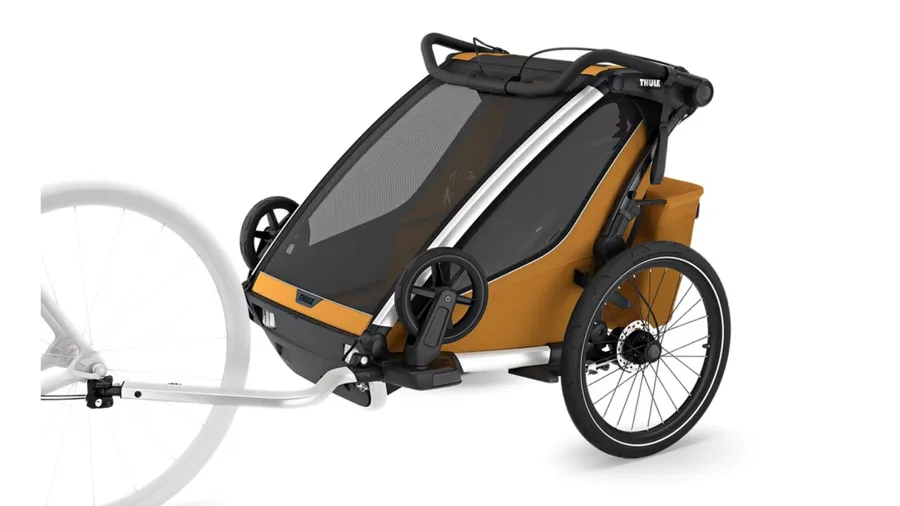
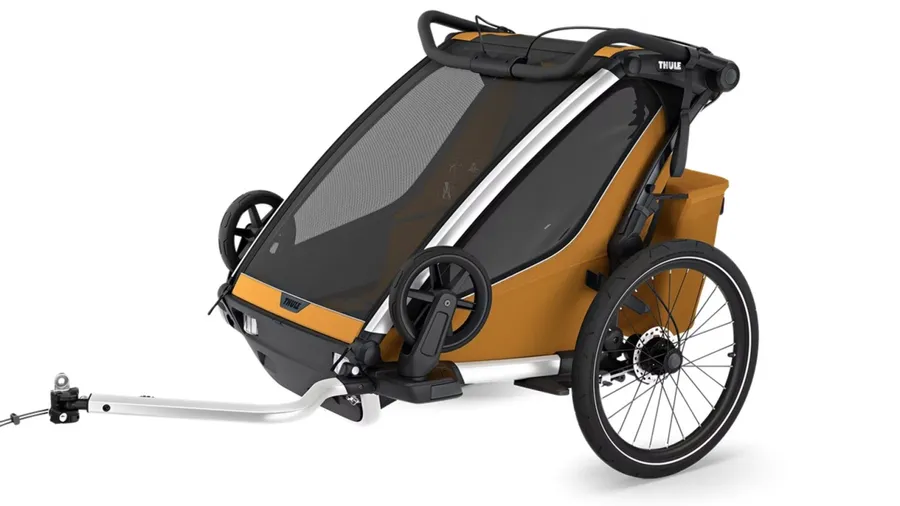
The top of the multisport range. Adjustable suspension, hand-activated disc brakes, integrated LED lighting. Two children of up to 22 kg each, 17.7 kg empty.
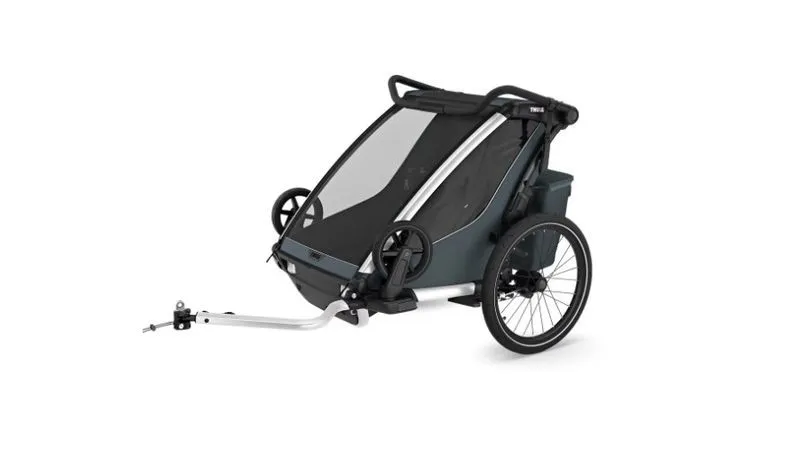
The same cabin and the same adjustable suspension, without the disc brakes or integrated lighting. Reclining seats, 16.1 kg. This is the everyday Chariot.
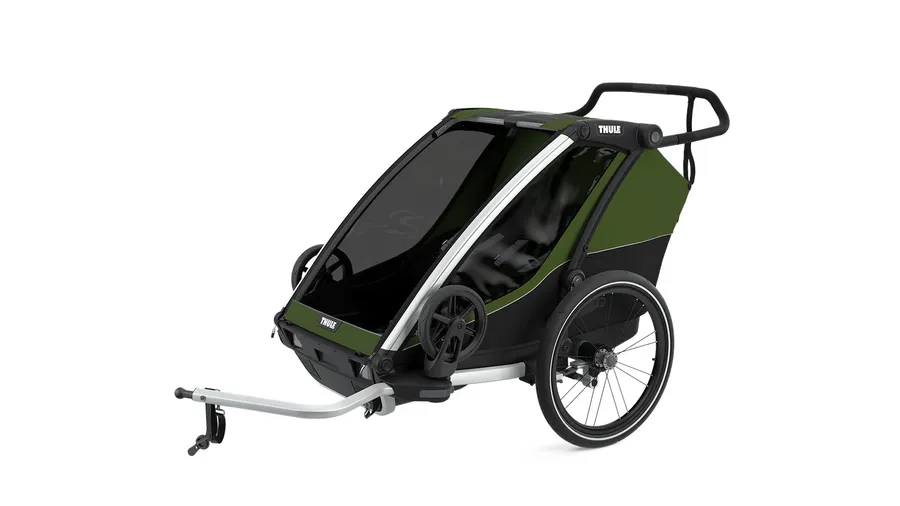
The roomiest cabin: 71 cm sitting height against 64, a hard floor and over 100 litres of cargo space. Built for loaded trips.
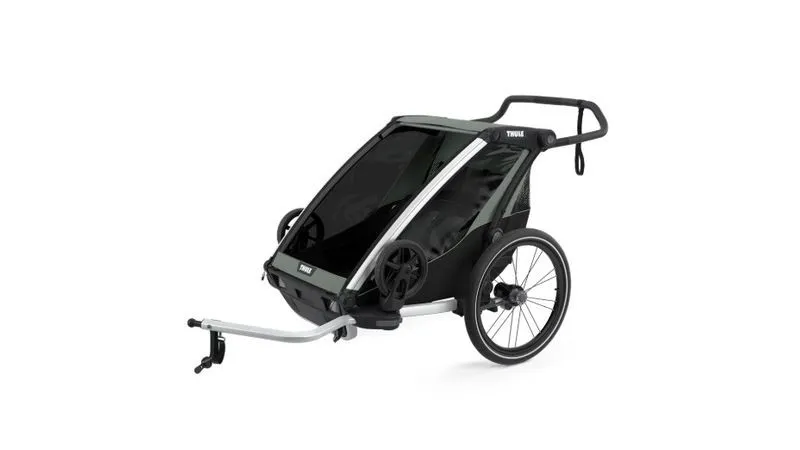
The lightest of the family: non-adjustable leaf-spring suspension, integrated mesh bag, simplified fold. Still two children of 22 kg, but without the bigger models’ adjustments.
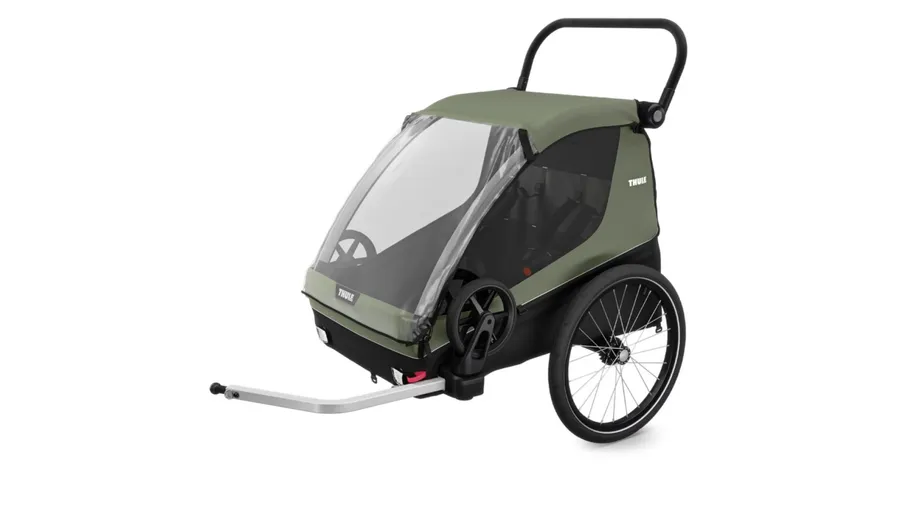
The simple trailer, without the multisport vocabulary. Two children from 0 to 5 years, two strolling wheels and the bike kit included. The right pick if you mostly ride in town.
What comes with it, and what you buy separately
→ On the Chariot, Thule lists the bike mode and the strolling mode as standard
→ The jogging kit (€172.95, double versions) and the ski kit are sold separately
→ The hitch attaches to the rear axle: plan for the ezHitch cup or plate that matches your bike
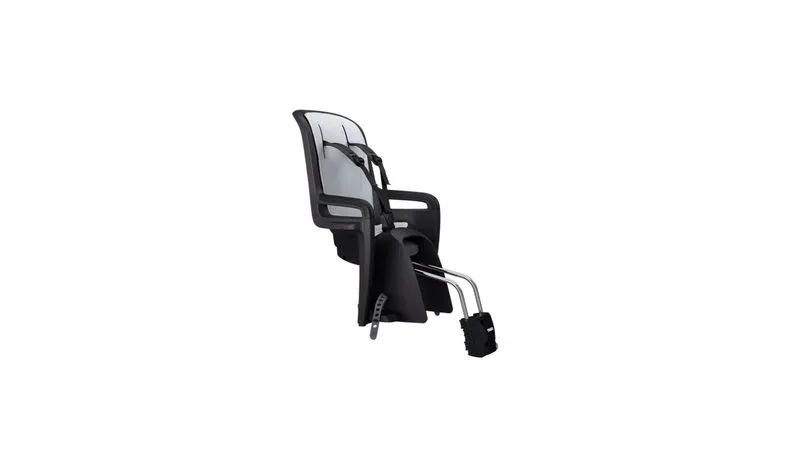
Child seats: the mount comes first
You choose a seat by its mount first, not by its name. On the frame, on the rack, or clipped to a MIK rack: your bike decides. Comfort and price come after.
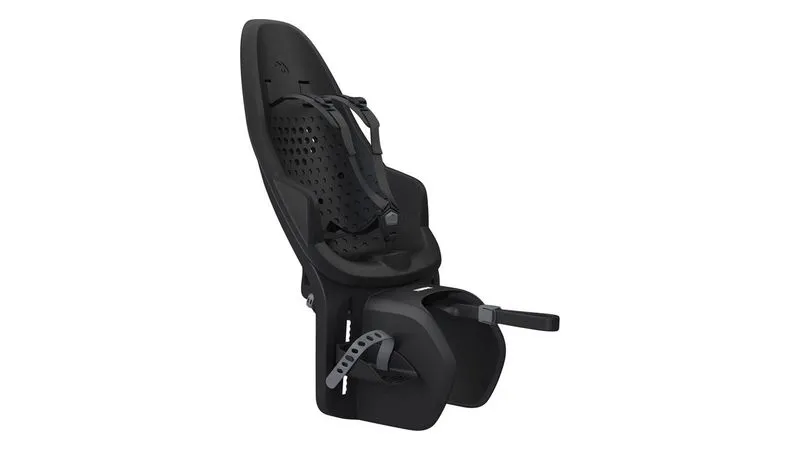
Shock-absorbing single-material shell, 5-point harness, adjustable footrests. The MIK mount clips onto a compatible rack without tools. From 9 to 22 kg.
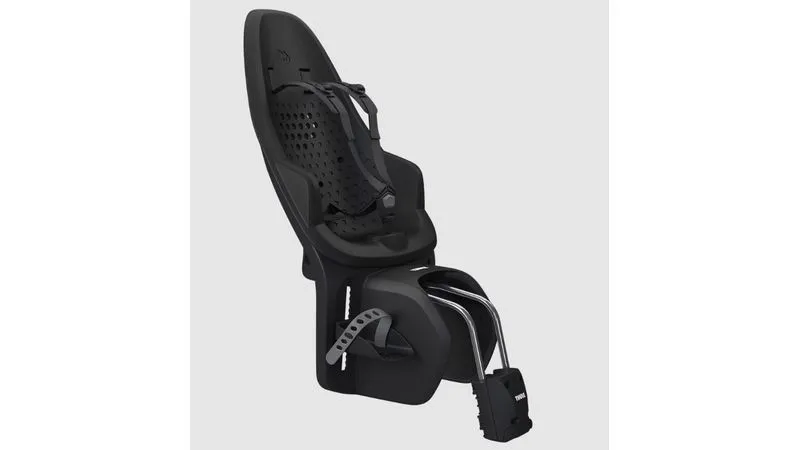
The same seat, mounted on the seat tube. That is the answer when the bike has no rack, or when its rack is not rated to carry a child.
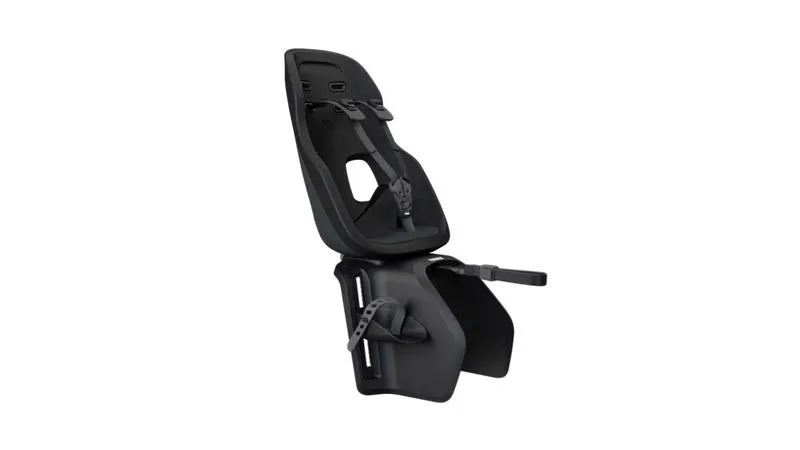
Lighter two-layer construction and a magnetic buckle: you strap the child in one-handed. Fitted with straps to a standard rack.
The Scandinavian seat: firm materials, armrests with safety wings that protect little hands, and a seat that reclines up to 20° for nap time.
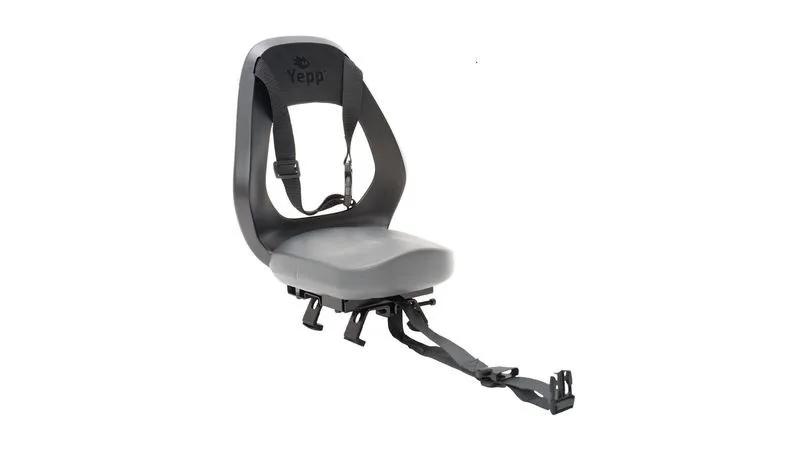
For after the baby seat: from 22 to 35 kg, roughly 6 to 10 years old. Easyfit mounting and Yeppie Feet footrests included.
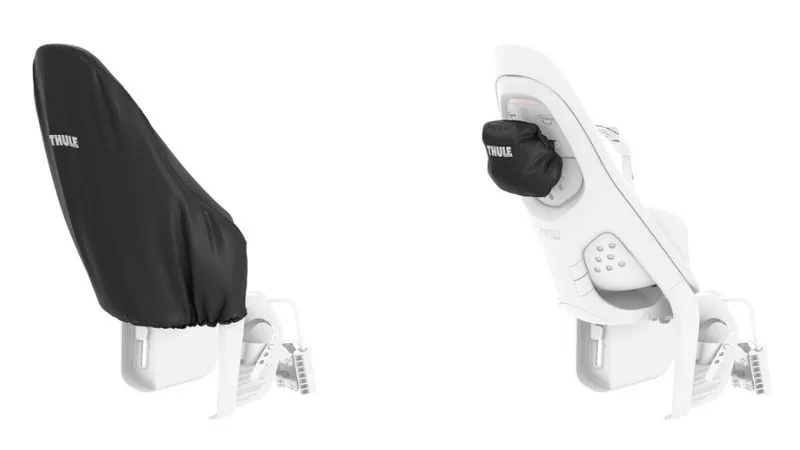
The rain cover that goes with the rear seat. The €20 accessory that decides whether the bike goes out in November.
Three mounts, to check before the model
→ Frame mount — clamps to the seat tube, independent of the rack
→ Rack mount — universal straps, on a rack rated for the load
→ MIK — tool-free clipping, only on a MIK rack (common on recent e-bikes)
Bike racks: three ways to load 60 kg
All three mount on the towball, all three tilt to open the boot, all three take e-bikes. What changes is the number of bikes, how easily they load, and how much room the rack takes once stored.
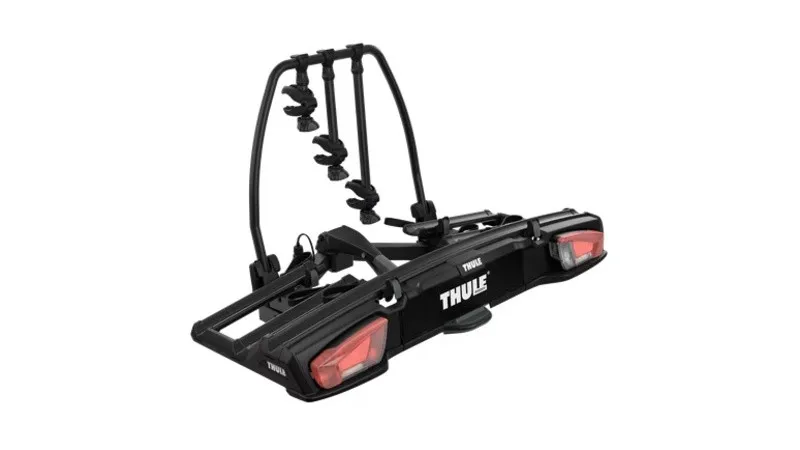
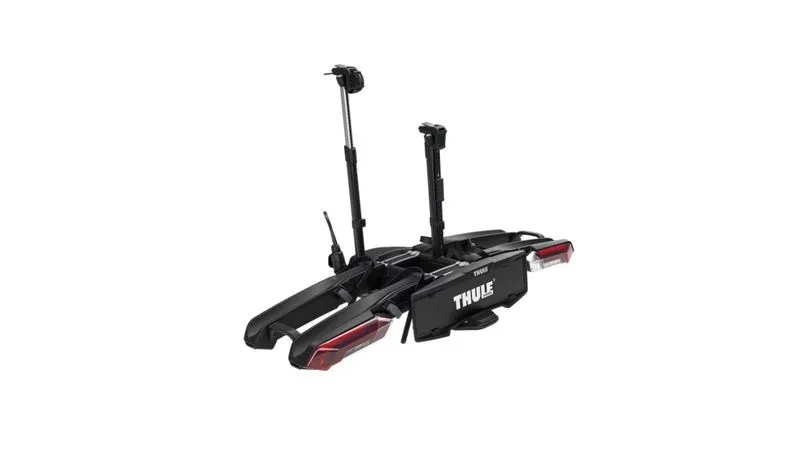
The most refined: telescopic arms that grip anywhere on the frame or rear wheel, fully foldable without tools, integrated lights and 13-pin plug. 30 kg per bike, wheelbase up to 1,350 mm.
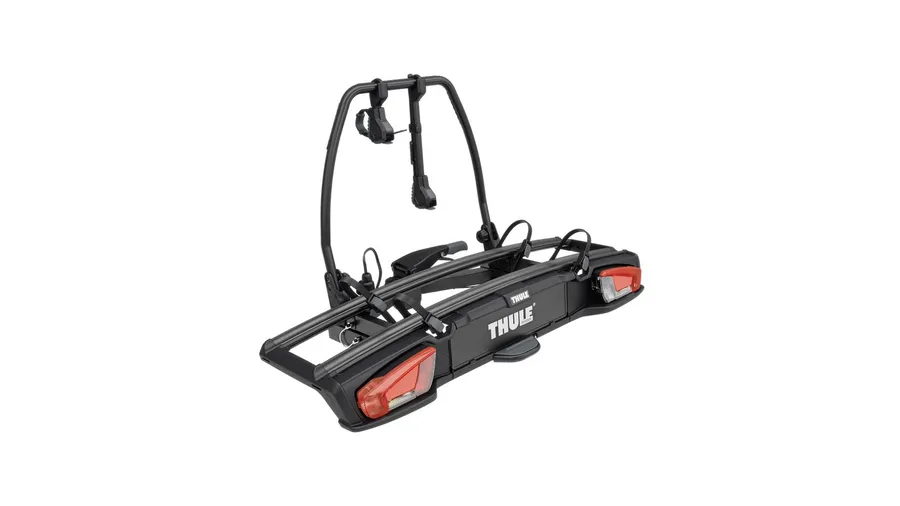
The heavy-duty one for e-bikes and MTBs: 30 kg per bike, 60 kg in total, tilt adjustable from 50 to 65° to clear a tailgate. Expandable by one more bike.
The previous VeloSpace generation, in its three-bike version. Its adapter (€204.95) adds a fourth bike, itself capped at 15 kg.
The bike rack's companions
→ High-Grade Lock (€69.95) — a 150 cm cable developed with ABUS, for the two- and three-bike racks
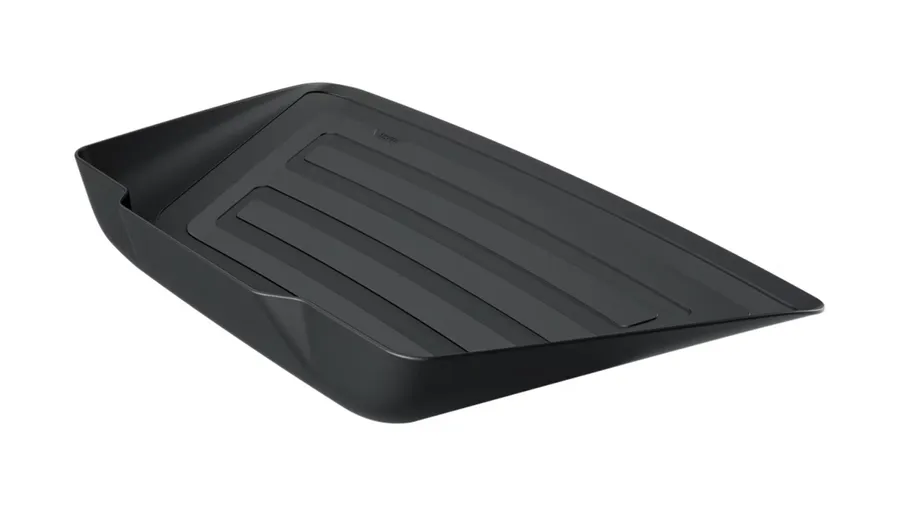
→ XT loading ramp (€69.95) — to get a 30 kg e-bike up without hurting your back
→ Frame adapter (€39.95) — essential on low frames and bikes without a top tube
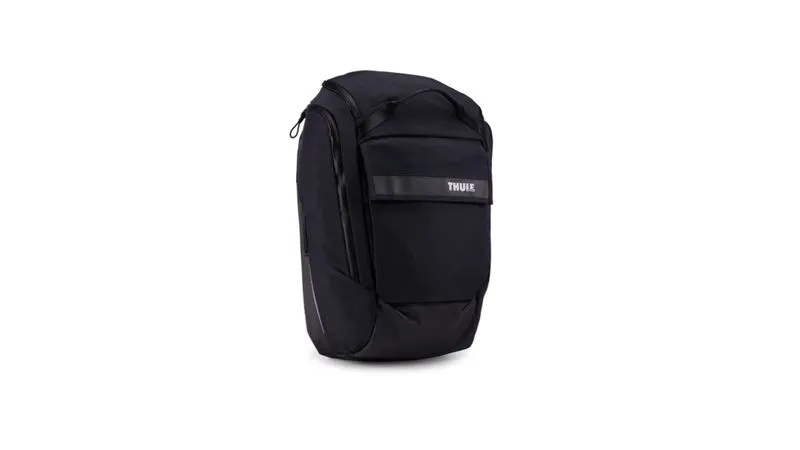
The bags: the rain, the office, the trail
Three ranges, three uses that do not replace one another. Shield is built for Belgian rain, Paramount to reach the office with a dry laptop, Rail to ride the woods with water on your back.
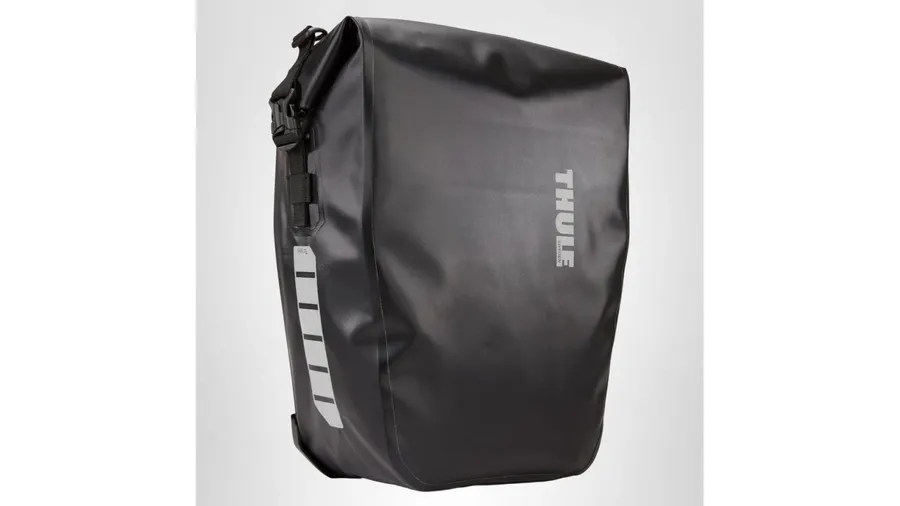
The rain pannier: welded seams, IPX4 rating, roll-top closure. Fits racks from 8 to 16 mm.
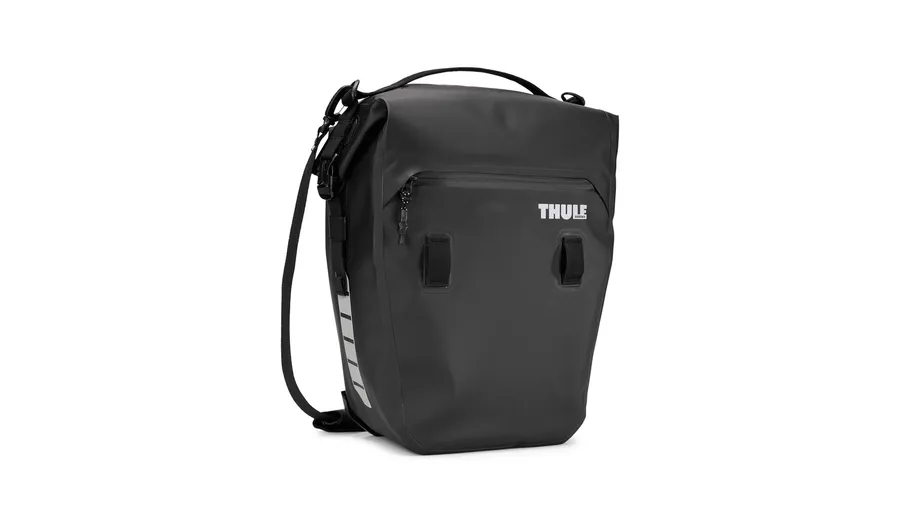
The everyday version, sold singly: the same waterproof idea, in a size that covers a commute.
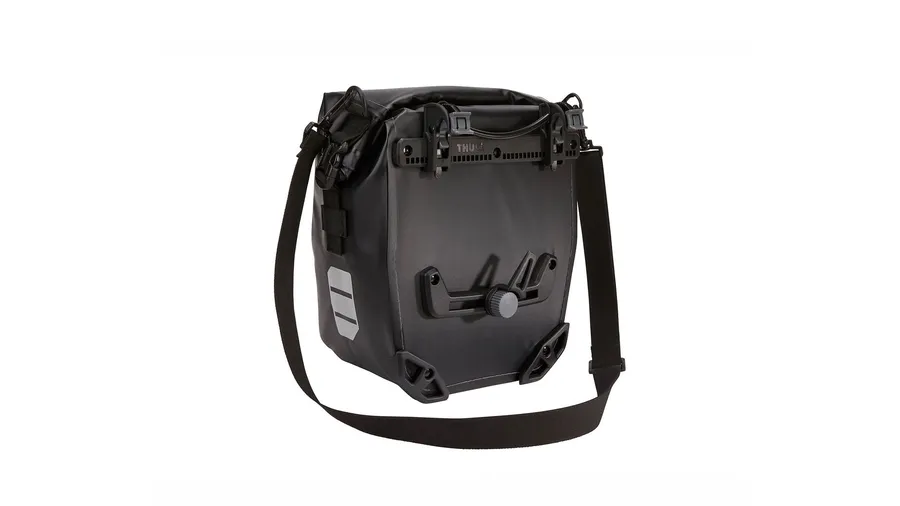
The small Shield format, for a bike that stays nimble and an everyday load.
Pannier in the morning, backpack in the afternoon: unzip the back panel, flip it over, and the shoulder straps appear. Padded laptop compartment, bluesign® certified, PFAS-free fabrics.
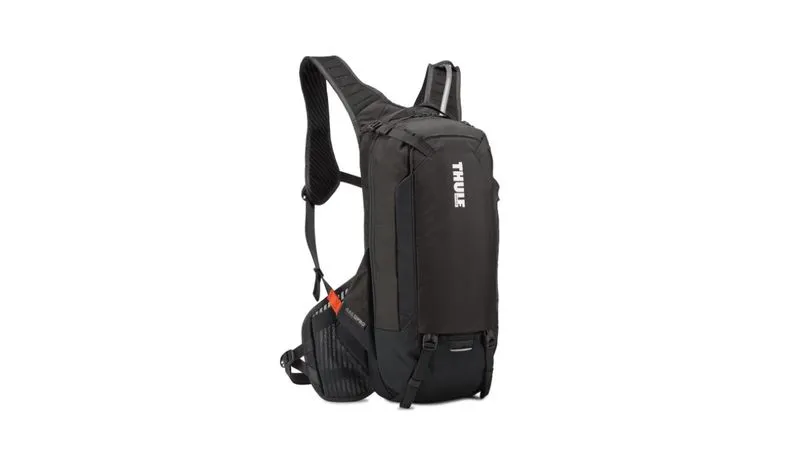
The MTB pack: hydration bladder, close-to-the-back carry, tool storage. Nothing like a city bag — here you are after stability on descents.
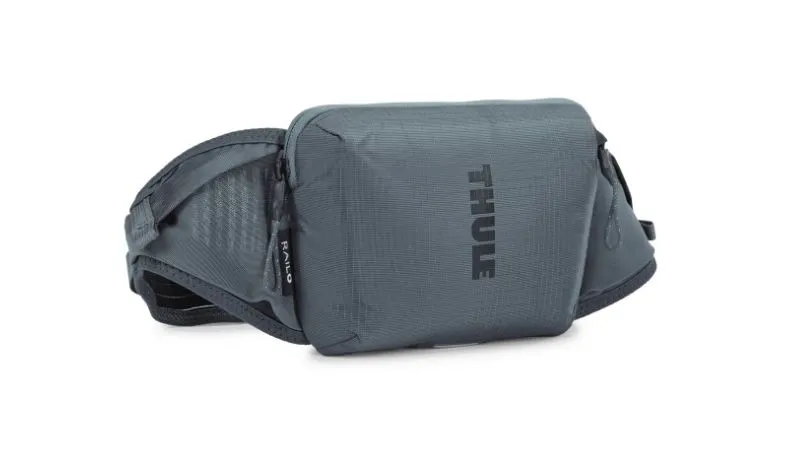
The hip pack, for rides where all you want is a spare tube, your phone and your keys.
The accessories that change everything
They decide whether the gear gets used or sits still. A sling opens the trailer to infants, a €25 hitch plate makes it fit your bike, a rain cover adds three months to the season.
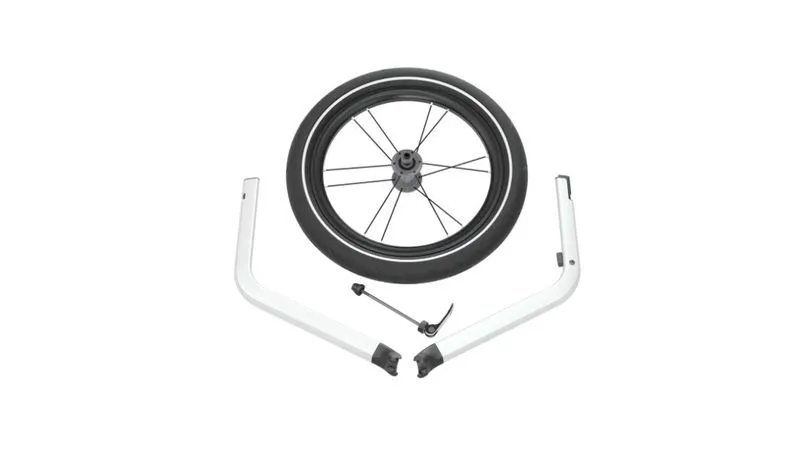
The fixed front wheel that turns the trailer into a running stroller. Double version.
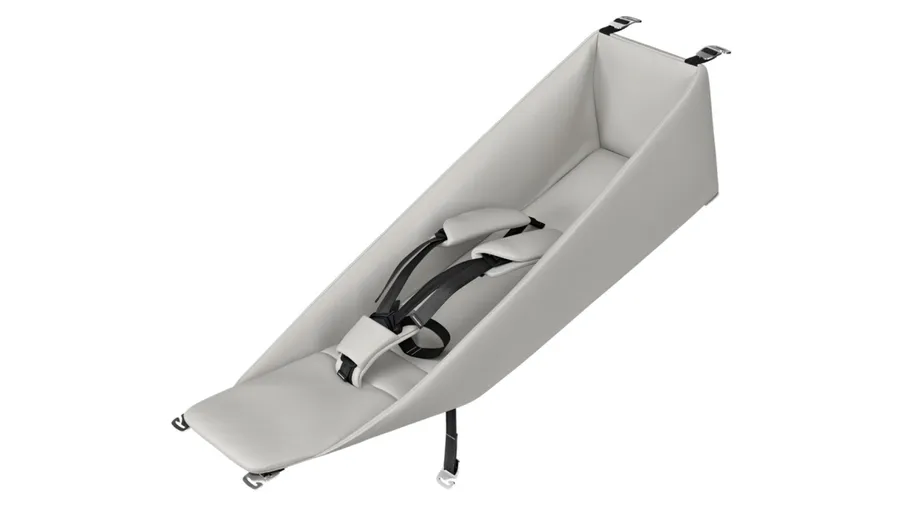
The sling that lets you take a baby along before they can sit up. It is what opens the trailer to infants.
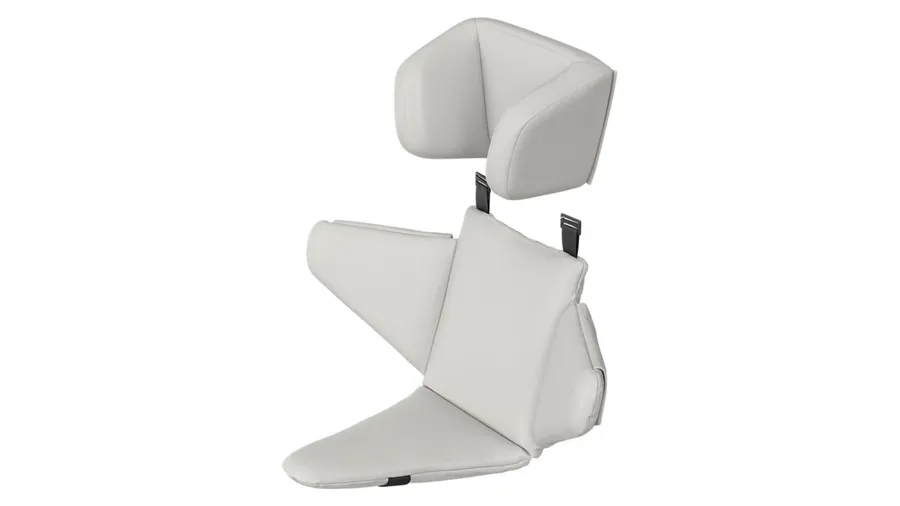
The in-between support, between the sling and the normal seat — roughly 6 to 18 months.
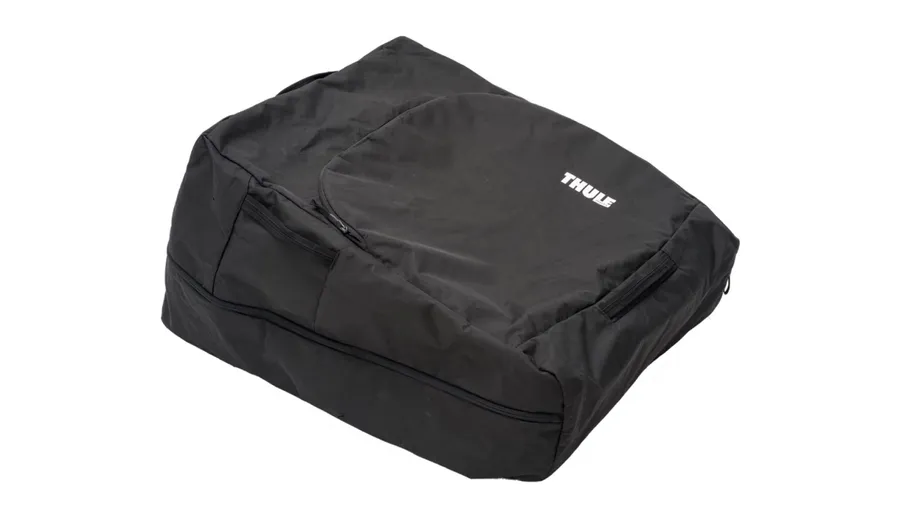
The bag to check the trailer in as luggage, or store it without getting it dirty.
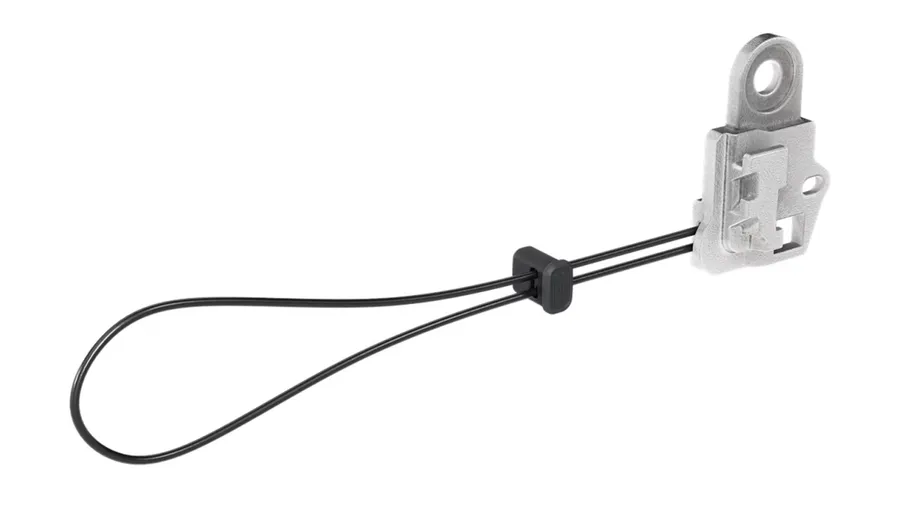
The hitch part that mounts on the bike’s rear axle. It is the one people forget — and without it the trailer stays in the garage.
How to choose
Trailer or child seat?
The seat keeps the child in sight and barely changes the bike’s footprint: that is the choice for short, daily trips. The trailer keeps the rain out, carries two children plus the shopping, and turns into a stroller on arrival — but it needs space, in the garage and on the road.
From what age can you take a child along?
Thule rear seats start at 9 kg, roughly when a child sits up unaided. For a trailer, Thule places the Courier from 0 to 5 years, with the infant sling required for the youngest. Either way: helmet on, and keep the first ride short.
Will a trailer fit my bike?
Almost always, provided you have the right hitch part. The Thule hitch mounts on the rear axle: an ezHitch cup on a classic axle, a specific thru-axle on a recent MTB or e-bike. Your axle’s measurement decides, and that is what we check in store before ordering.
Is one rack enough for two e-bikes?
Yes on the Epos and the VeloSpace 3, which take 30 kg per bike and 60 kg in total. But two numbers still need checking on your car: the maximum nose weight allowed on the towball, and the payload left once family and luggage are aboard. It is almost always the car that limits, not the rack.
Do you need lights and a plate on the rack?
As soon as the rack hides the car’s lights and plate, it must carry its own: that is why the Epos and the VeloSpace ship with a full rear light unit and a 13-pin plug, and why you must add a duplicate plate with your registration.
Hesitating between two models?
The catalogue is online, and the fitting happens in store — with your bike and your car right there.