
The Taurus Mountain Race is a fully self-supported bikepacking race, held for the first time in October 2026 in southern Turkey. 1,460 kilometres, 36,000 metres of climbing, a start in Antalya on 14 October and a finish in Erdemli by midnight on 24 October at the latest. No support, no private resupply, no pre-booked accommodation: everyone carries what they need.
I'm Adrien, manager of the KAMEO shop in Brussels, and I'll be on the start line of this major event in the world of ultra-distance. This first article explains what this race really is: the route, the self-support rule, the weather you can expect and the bike it calls for.
First instalment of a four-part series. The figures come from the Race Manual 2026, a preliminary version reserved for registered riders, consulted in September 2026 and subject to change until the start.
1,460 km
from Antalya to Erdemli, almost entirely off-road
36,000 m
of climbing, or four times Everest
3
mandatory checkpoints, no support in between
Why this one?
Wide tracks, unpredictable surfaces and one valley after another: that's exactly the terrain I came looking for.
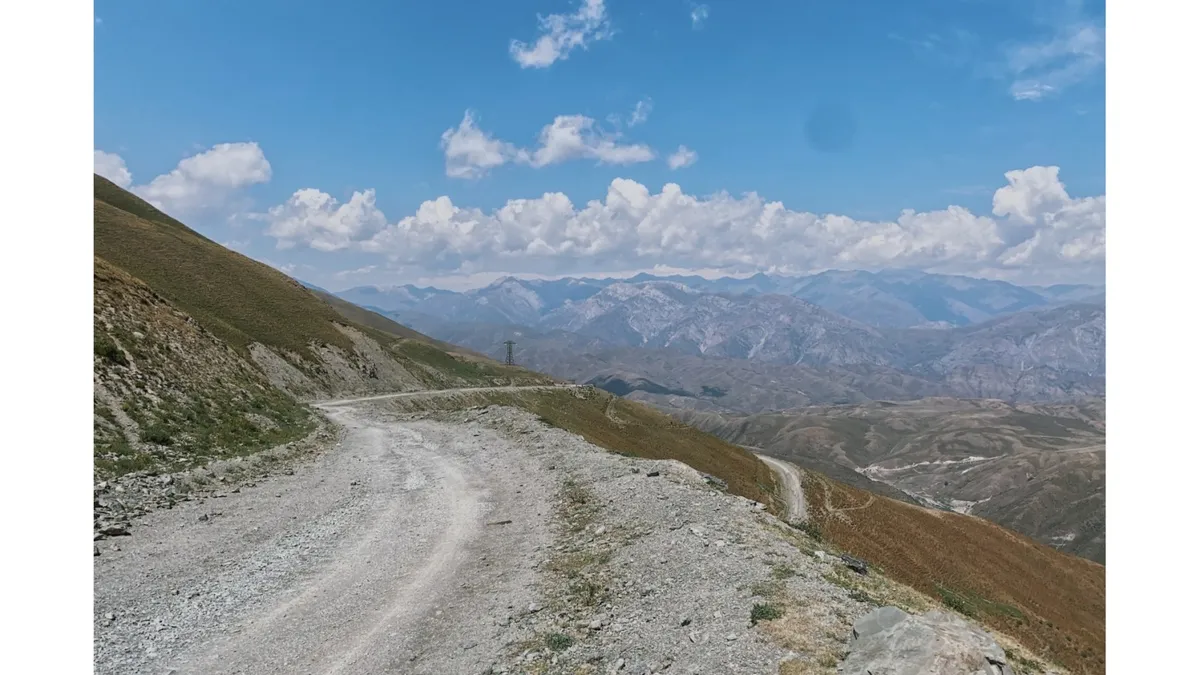
Because it's a first edition, and because Nelson Trees, who organises it, puts on brilliant races in Kyrgyzstan, Morocco, Greece and now Turkey. Also because it's off-road: mountain biking speaks to me, it's where I have the most fun. I've already finished the Silk Road Mountain Race, the Atlas Mountain Race, the Transbalkan, the Italy Divide, the Bohemian Border Bash, the Pirenaica and several races in Belgium and elsewhere. This one, I really wanted to be part of.
The route
Start and finish on the same Mediterranean coast, with a 1,460-kilometre detour through the hinterland. A route the organiser himself describes as "winding and completely pointless, but quite pretty". That works out at nearly 2,500 metres of climbing per 100 km, the cumulative equivalent of four ascents of Everest. Most of the route follows 4x4 tracks and gravel roads, with very little tarmac.
The exact route stays secret until a few weeks before the start. Nobody will be able to go and recce it ahead of the others, and that's just as it should be.
The three mandatory checkpoints
→ after 250 km
→ after 654 km
→ after 1,111 km
Self-support, in the strictest sense
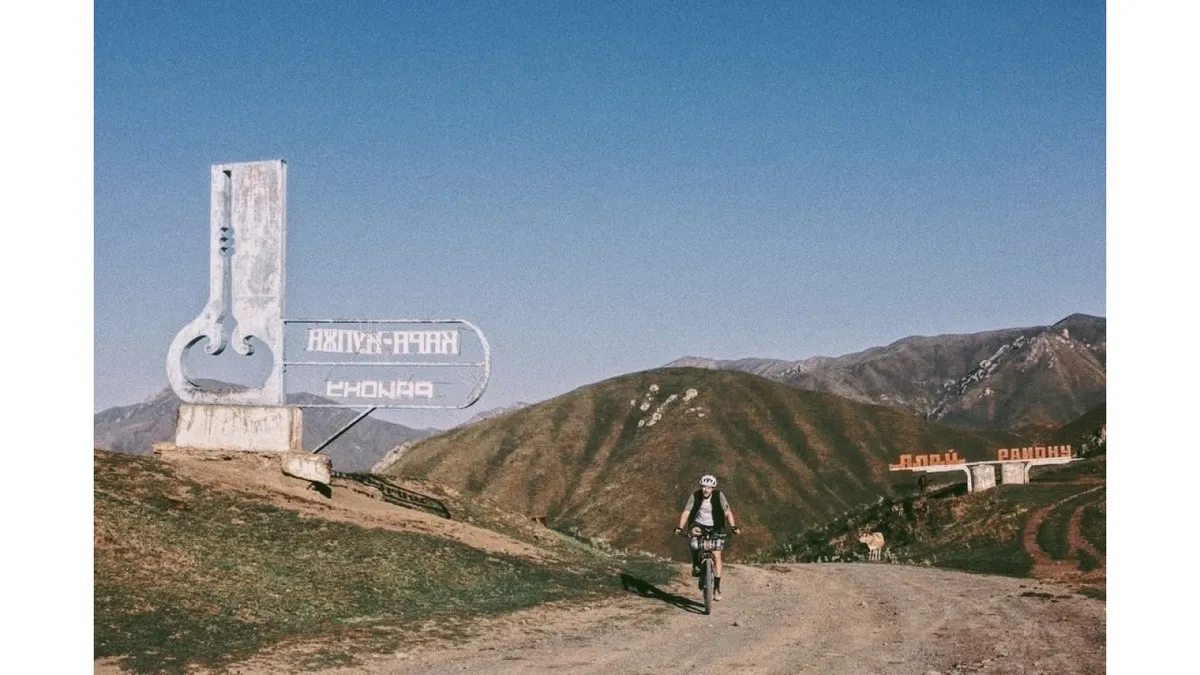
Crossing a pass at dawn. Hours without meeting a living soul: that's what full self-support means.
When I explain the ins and outs of this race, the sentence I hear most often is: "I didn't know it was possible to do that." No outside support, no private resupply or accommodation, no drafting behind another rider, and every move is made under your own leg power. What locals offer spontaneously can be accepted; what you ask for cannot.
On the Silk Road, what that means in practice is crossing the Arabel valley: two and a half days without resupply, without support and, above all, without meeting anyone. That can be a bit tough at times. Here in Turkey there are 25 resupply points, around a hundred kilometres apart on average, but the most remote section comes close to 200 km without a single shop. You also have to bear in mind that a Turkish village grocery is not a supermarket: the options are limited and you need to plan your calories carefully.
Four seasons in ten days
The route climbs above 3,000 m altitude. During the recces, the organisers recorded temperatures ranging from +30 °C to -5 °C, with rain and a bit of snow to top it all off. What worries me most is definitely the rain: I get cold quickly on the bike and it saps my morale, so I kit myself out accordingly to delay the moment it gets through my gear.
The mandatory kit follows the same logic
→ a sleep system that lets you sleep at -5 °C
→ waterproof jacket and waterproof trousers
→ bivy or tent, two pairs of gloves
→ survival blanket, water purification, powerful lights
Which bike to take?
The organiser is clear, and the following line sets the tone: "at the finish, many riders who started on a gravel bike wished they had been on a mountain bike, but no rider who started on a mountain bike regretted not being on a gravel bike."
Mountain bike not a gravel bike — that's the organisers' explicit recommendation
2.0 inches min. the minimum tyre width, to be treated as a floor rather than a target
Flat bar for control when descending on tracks, fully loaded
1:1 ratio the easiest gear required — and in practice you'll want an even easier one
For my part, the question isn't speed but breakages. On loaded bikes coming back from trips, what we see most often are torn tyre sidewalls, broken drivetrain parts and worn brakes. Preparing a bike for this kind of event means anticipating that wear and avoiding lost time or having to scratch.
The questions I get asked
Full self-support: does that mean you can't buy anything?
Quite the opposite: anything available to anyone under the same conditions is allowed. You can buy from a grocery, eat in a restaurant, sleep in a hotel. What's forbidden is any private arrangement: a friend coming to bring you food, accommodation booked in advance just for you, a following car.
Can you ride with others?
You cross paths, you chat, you share a stretch of road. But drafting is forbidden: riding on someone else's wheel to save energy falls outside the scope of a solo event.
Why is the route kept secret?
So that nobody can go and recce it. The track is sent to all riders only a few weeks before the start: everyone discovers it at the same time, and navigation is part of the race.
Could a gravel bike make it?
The rules require a mountain bike, tyres of at least 2.0 inches and a flat bar. Over 1,460 km of tracks with 36,000 m of climbing, comfort and a margin against breakages matter more than efficiency. That's the point of the organiser's line quoted above.
Next in the series
→ #2 — The kit: the bike, the bags, the tools
→ #3 — The preparation: training and sleep
→ #4 — Nutrition: eating and drinking self-supported
Our sources
Distance, climbing, dates, checkpoints, resupply points, temperatures recorded during recces, mandatory kit, rules and bike recommendations: Taurus Mountain Race — Race Manual 2026, preliminary version for registered riders, Silk Road Mountain Race LTD (themountainraces.cc).
Field experience from the Silk Road Mountain Race and breakdowns seen on loaded bikes: personal experience and the KAMEO Bikes workshops in Liège and Brussels.
Planning a trip or a race like this?
The KAMEO workshop works on all brands, not just the ones we sell. Come and see us at the workshop.