
You don't prepare for a ten-day race the way you prepare for a sportive. What matters isn't one day's power, it's the ability to string together big days, on little sleep, probably underfed relative to the calories burned, and carrying all your kit.
I'm Adrien, manager of the KAMEO shop in Brussels, and I'm aiming for under five days over the 1,460 km of the Taurus Mountain Race. Here's what that goal involves in practice: the volume, the typical week, strength training and sleep.
Third instalment in a series of four. Distances and times come from the Race Manual 2026, a preliminary version for registered riders, consulted in September 2026. The training volumes reflect my personal practice and are not a programme to follow.
< 5 days
my goal, when the race allows ten
300 km
and more than 7,000 m of climbing a day, on a loaded bike
15 to 20 h
of training a week, riding and strength work
Start with the maths
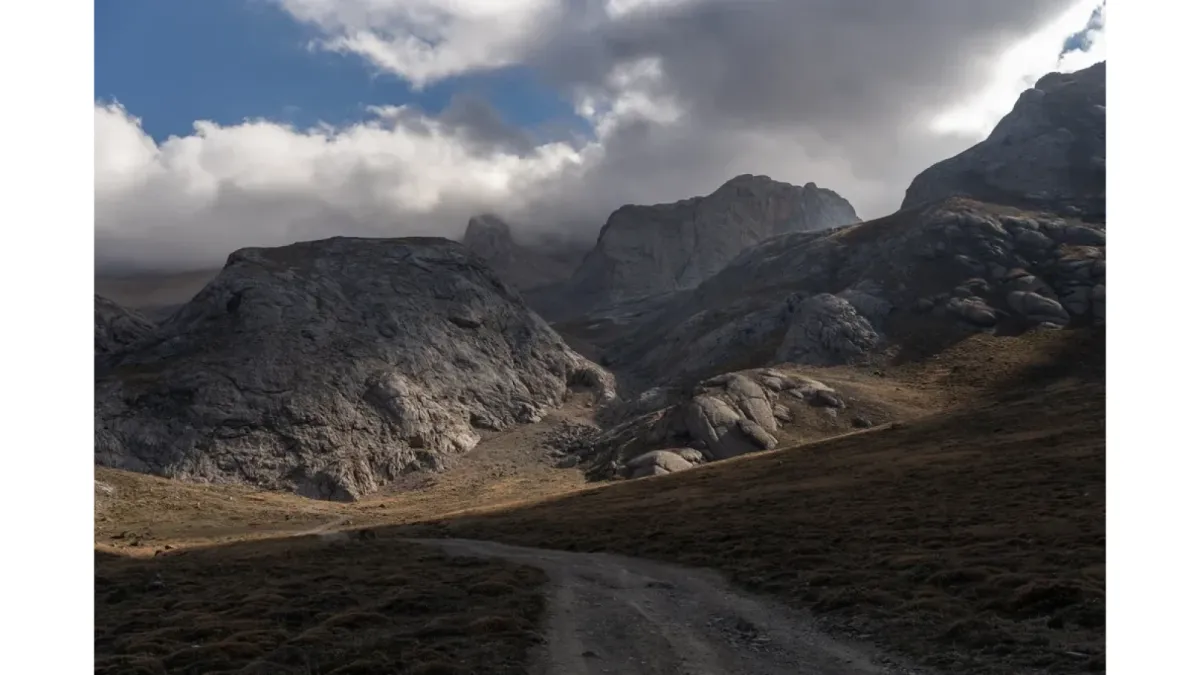
View of a pass in the Taurus Mountains. It's this repetition you train for, not the performance of a single ride.
1,460 kilometres, 36,000 metres of climbing and a finish line that closes ten days after the start. That calculation, and nothing else, dictates the training.
Two ways of reading the same race
→ finishing within the time limit: nearly 140 km and 3,400 m of climbing a day, breaks and sleep included
→ finishing in under five days: nearly 300 km and more than 7,000 m of ascent a day, every day, on a loaded bike
My week
I train between fifteen and twenty hours a week. The basic structure barely changes.
Monday strength training
Tuesday and Wednesday riding
Thursday strength training
Friday short ride, or rest
Weekend the big days, the ones that build repeat endurance
I do a huge amount of strength training, for the joints as much as for the muscles, and I'm followed by a physio who adapts the programme to my riding, to how I feel and to how all of that evolves. It's not an extra: it's what lets me absorb the volume without getting injured.
I do zones and intervals, but mostly in winter and well in advance. They matter less in ultra than in shorter formats, even though being able to ride at threshold is still significant. In practice: one or two turbo trainer sessions a week in winter, and outdoors the rest of the year.
Fitting it around the shop
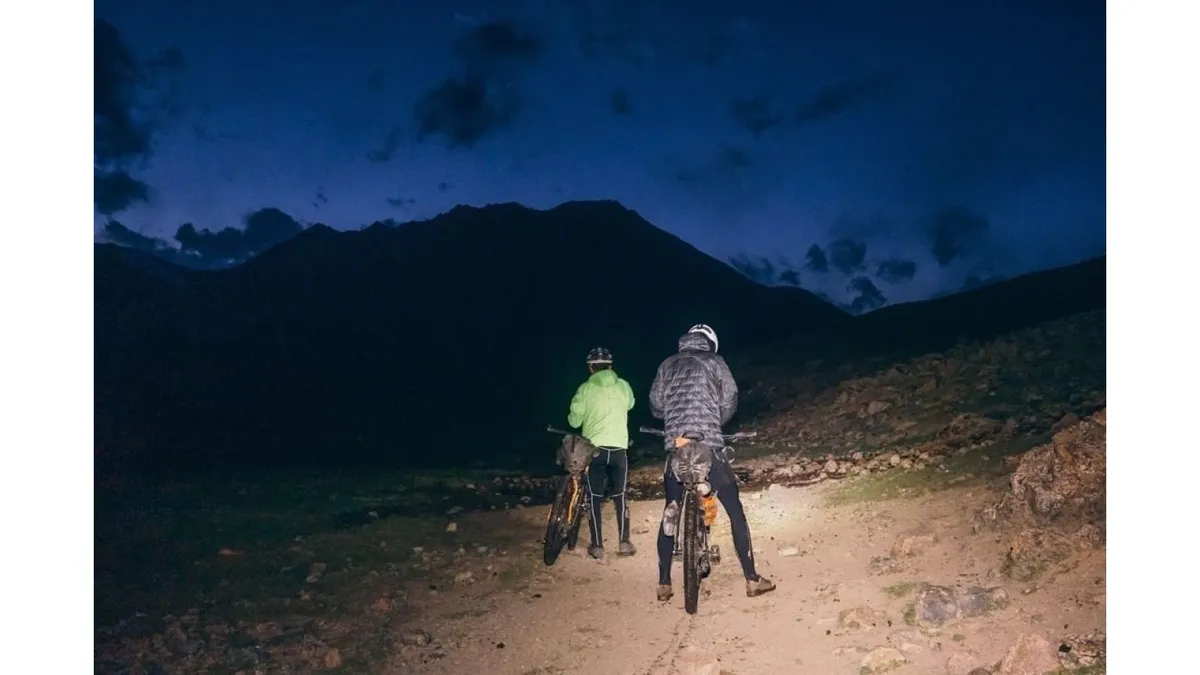
With a fellow competitor, before a night on the bike. Moments like these are paid for in organisation over the preceding months.
I ride either in the morning or in the evening. Same for strength training. It all comes down to organisation: early to bed, early to rise, and living a bit like a monk. There are sacrifices to make, especially in terms of social life and going out. But the happiness you feel once you're racing makes those sacrifices very easy to accept.
Repeat endurance
I never ask myself “how fast can I ride today?” but “what state will I be in tomorrow morning if I ride at this speed?”. That ability to recover overnight and set off again is a skill in its own right, separate from fitness, and you acquire it by stringing long days together. If there's one mistake I've made, it's thinking I was stronger than I was: easing off too early in training, or riding too fast at the start of a race.
You also need to ride loaded. A loaded bike doesn't behave like a bare bike, and it's the only way to discover in time the contact point that becomes painful after several days. The body adapts to a lot of things, but it doesn't adapt during the race: that work is done beforehand.
Sleep
To stay under five days, I aim for four to five hours of sleep a night: that's what lets you last the distance. And I cut it towards the end, with the last night as an overnighter to save time and potentially gain a few places. On the final day, mentally, it actually goes quite well.
The rule I never break
→ never scratch at night. It's always better to sleep and take stock with a rested mind than to decide when you're no longer thinking clearly.
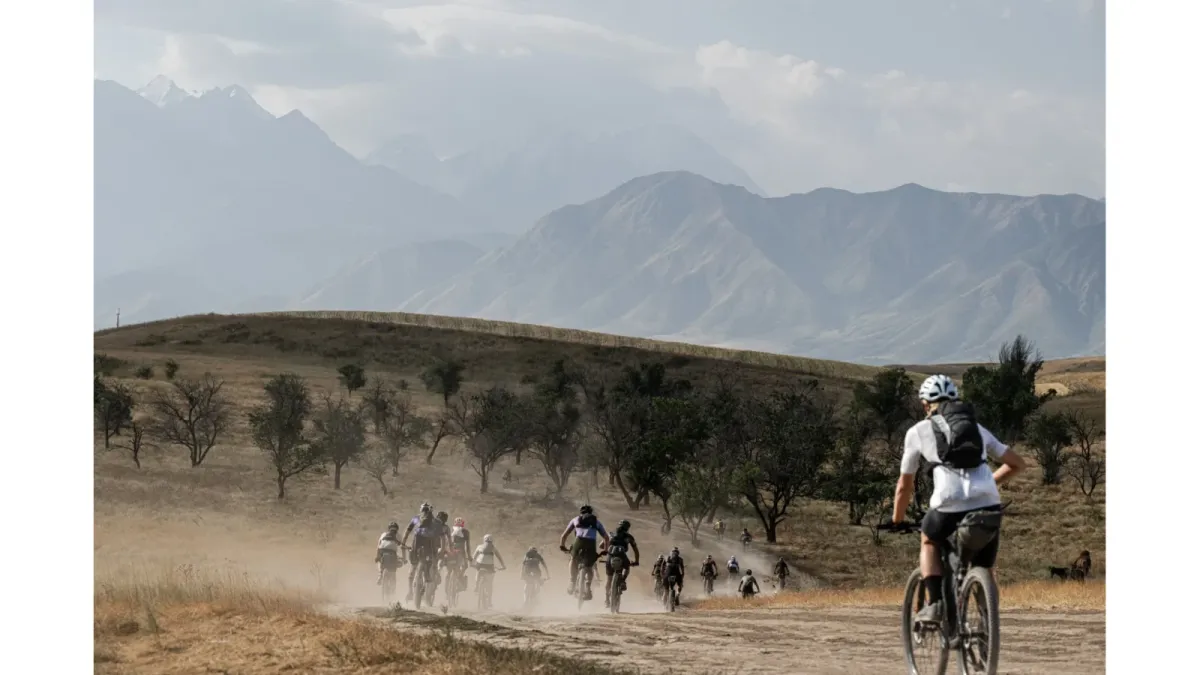
The participants, just after the start. Ten days later, not many of them will still be riding together.
The questions I get asked
Do you need to ride 20 hours a week to finish?
No. That volume corresponds to a goal of under five days. To finish within the time limit, the maths comes down to around 140 km and 3,400 m of climbing a day: that's a completely different project, which mainly requires being able to string long days together, not being fast.
Is strength training really necessary?
It's what lets me absorb the volume without getting injured. It works the joints as much as the muscles, and it's best supervised by a professional who adapts it to your riding rather than copied from a generic programme.
Should you do intervals?
They count for less than in shorter formats, but being able to ride at threshold is still useful. I schedule them in winter, well before the event, with one or two turbo trainer sessions a week; the rest of the year is spent outdoors.
Can you train without loading the bike?
It's the best way to discover mid-race the contact point that becomes painful on the third day. A loaded bike doesn't handle, climb or descend like a bare bike: those sensations are worked on beforehand, not during.
The rest of the series
→ #1 — The race explained: route, self-sufficiency, weather
→ #2 — The kit: the bike, the bags, the tools
→ #4 — Nutrition: eating and drinking self-supported
Our sources
Distance, elevation gain, start and closing times, warnings about exhaustion and sleep deprivation, documents required at registration: Taurus Mountain Race — Race Manual 2026, preliminary version for registered riders, Silk Road Mountain Race LTD (themountainraces.cc).
Daily averages: calculated from these figures, detailed in the text.
Training volumes, typical week, strength training and sleep strategy: personal practice, not intended as a programme.
Questions about how you train?
Write to us, we'll take the time to talk it through.