
The question isn't so much what to eat, but where. On the Taurus Mountain Race, the average distance between two resupply points is around 100 km, and the most isolated section approaches 200 km. Feeding yourself becomes a logistics problem before it's a nutrition problem.
I'm Adrien, manager of the KAMEO shop in Brussels. Final instalment in the series: what I eat before the start, how I plan during the race, and why water poses a problem that food doesn't.
Fourth instalment in a series of four. Resupply data come from the Race Manual 2026, a preliminary version for registered riders, consulted in September 2026. Calorie figures are personal estimates, not measurements.
25
resupply points along the whole route
200 km
the most isolated section, without a single shop
8,000 kcal
burned per day, against 4,000 to 5,000 you can take in
Before the race: loading, in both senses
A haven of peace at the checkpoint: a proper meal means that many calories you won't have to carry.
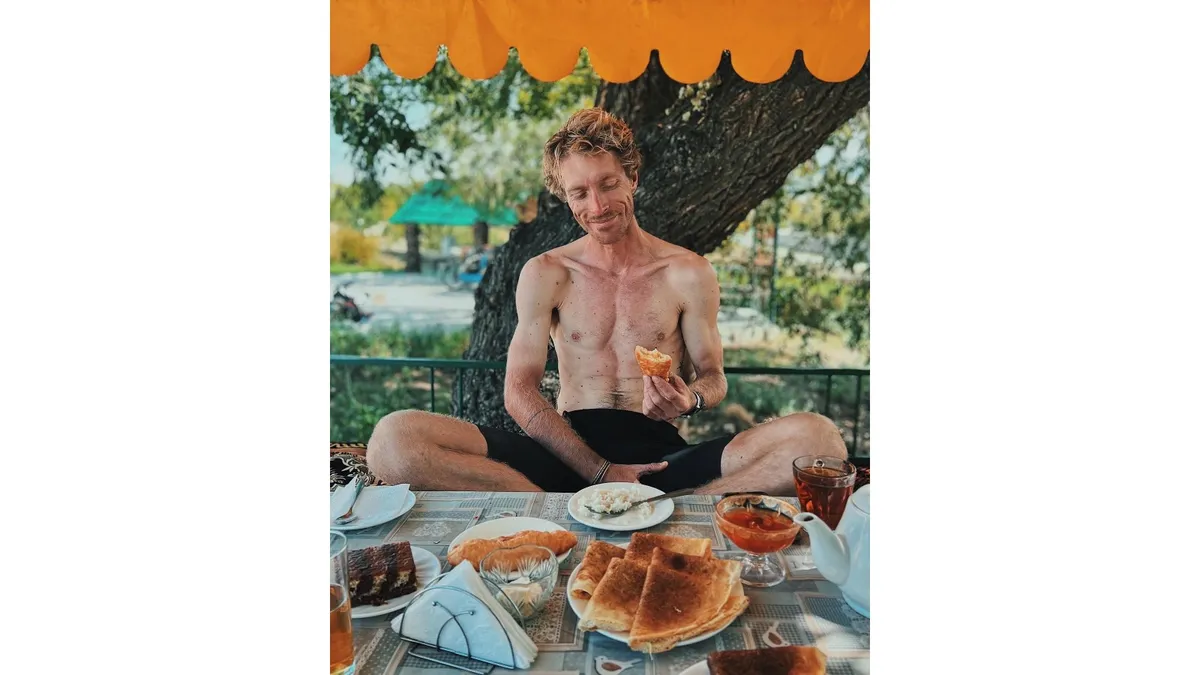
In the week before the start, I eat lots of rice and lots of pasta for classic carb loading. But I also do something that seems contradictory: I eat fatty food, to build up reserves. On a race like this, you burn so many more calories than you can take in that if your body has no reserves, it will draw directly on your muscles. That's happened to me once already, and I want to avoid repeating the experience.
The organisers put the emphasis above all on the stomach, and I learnt that the hard way. On the Silk Road, I drank poorly filtered water from a river and spent the next three days with serious digestive problems, in the middle of the race. Since then, I carry a basic medical kit on every race outside Europe. It weighs nothing and can save me a lot of trouble.
During: think in sections, not days
25 resupply points line the route, very unevenly spread: a few major resupplies with restaurants and hotels, a long series of village grocery shops, and up to nearly 200 km without a single shop. Their opening hours are also unpredictable, with no guarantee they'll be open when you pass. So I don't plan my meals by day, but by section between two resupplies.
What I carry, what I buy
→ brought from Belgium: gels, a few specific performance products, mineral tablets
→ bought locally: whatever I find, Snickers, a small restaurant when there is one
→ the rule: what you can't find, you carry; what you can find, you buy
How much, and how?
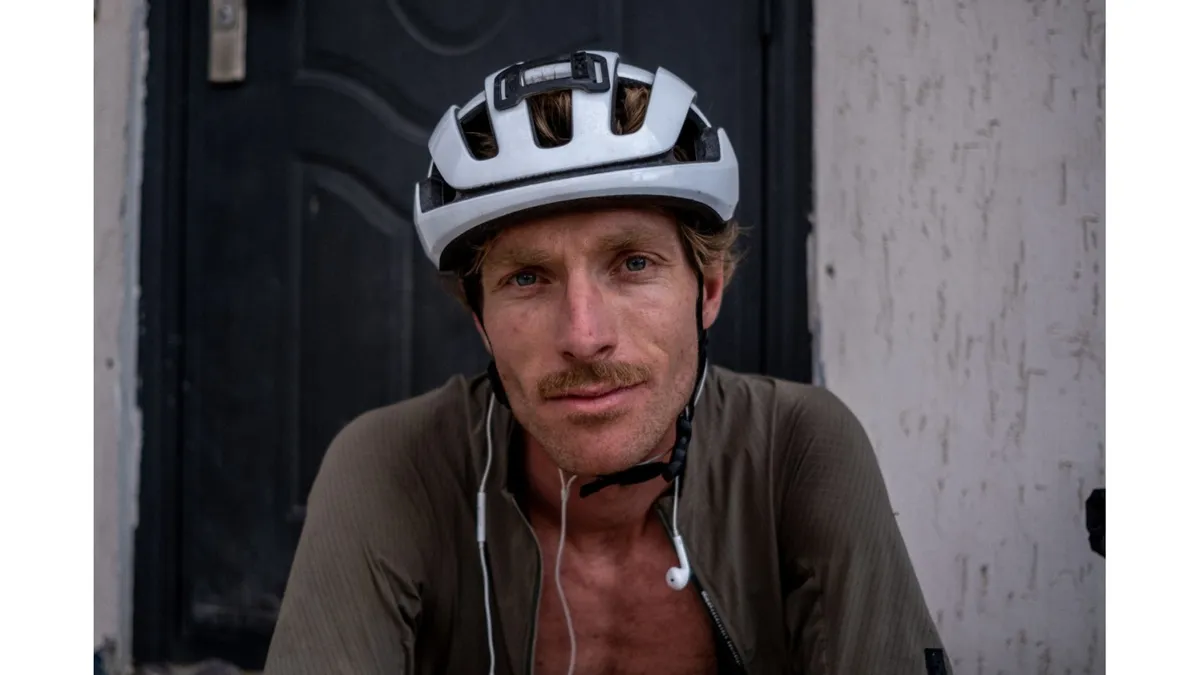
Adrien, manager of the KAMEO shop in Brussels. In this format, the gap between what you burn and what you swallow is structural.
On a day like this, energy expenditure is around 8,000 kcal, whereas I can realistically only take in 4,000 to 5,000. That's why reserves matter. I don't count anything during the race: as soon as I can eat, I eat.
And when you're no longer hungry but still need to get something down, my best ally is drinking yoghurt. No need to chew, it goes down by itself, it does you good. It sounds silly, but it gets you out of tricky situations.
Water, and hot meals
A means of purifying water is on the mandatory kit list, and I'm uncompromising about it: I always treat it, even when the river looks crystal clear. I set off with a LifeStraw filter bottle. Water also poses a problem that food doesn't: it's heavy, and water points don't necessarily coincide with food resupplies.
As for hot meals, the organisers provide food at the Köprülü Canyon and Demirkazık checkpoints. These services remain within the rules because they're available to everyone on the same terms.
Where the rules draw the line
→ allowed: anything you pay for in a business open to everyone
→ forbidden: any private arrangement, on pain of disqualification from the race
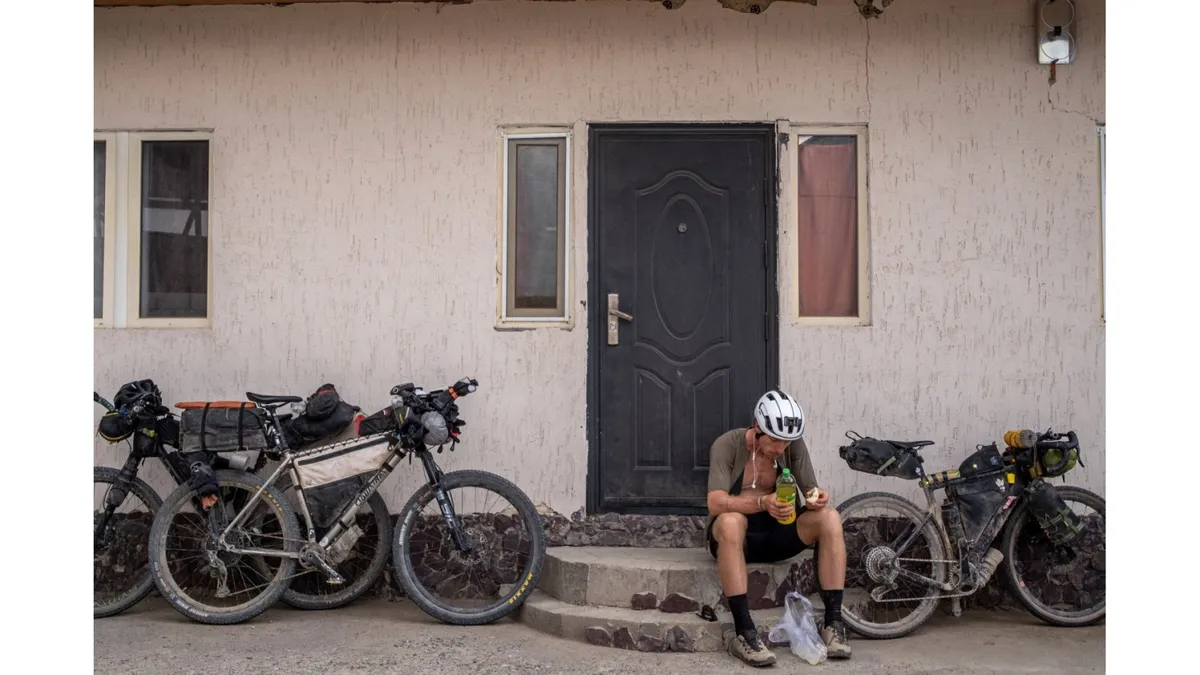
A night in a hotel. Major resupply points sometimes offer far more than just restocking.
The questions I get asked
Should you bring all your food from Belgium?
No, and it would even be counterproductive: every calorie you carry is weight you have to haul uphill. I only bring what I can't find locally — gels, specific products, mineral tablets — and buy the rest in village grocery shops.
What do you do when you're no longer hungry?
That's the real problem after a few days. Liquids go down when solids no longer do: drinking yoghurt is my best ally, because there's nothing to chew and it's easy to digest. Keeping something going down matters more than exactly what it is.
Do you really need to filter water that looks clean?
Yes, every time. A clear river tells you nothing about what's upstream, and three days of digestive problems mid-race cost infinitely more than the seconds lost filtering. A means of purification is on the mandatory kit list anyway.
Is eating in a restaurant compatible with self-sufficiency?
Yes. What counts is that the service is available to all riders on the same terms: an open restaurant, a grocery shop, a hotel taking guests. It's a private arrangement — someone waiting for you with a meal — that is forbidden.
The rest of the series
→ #1 — The race explained: route, self-sufficiency, weather
→ #2 — The kit: the bike, the bags, the tools
→ #3 — Preparation: training and sleep
Our sources
Number and distribution of resupply points, maximum distance without a shop, warnings about digestive problems, the obligation to purify water, food available at checkpoints and rules on outside assistance: Taurus Mountain Race — Race Manual 2026, preliminary version for registered riders, Silk Road Mountain Race LTD (themountainraces.cc).
Daily calorie expenditure and intake: personal estimates based on my previous races, not measured in a laboratory.
Pre-race strategy, choice of filtration and field feedback: personal experience.
A question about preparing for a self-supported trip or race?
Write to us, we'll be glad to answer, and we know what we're talking about.